
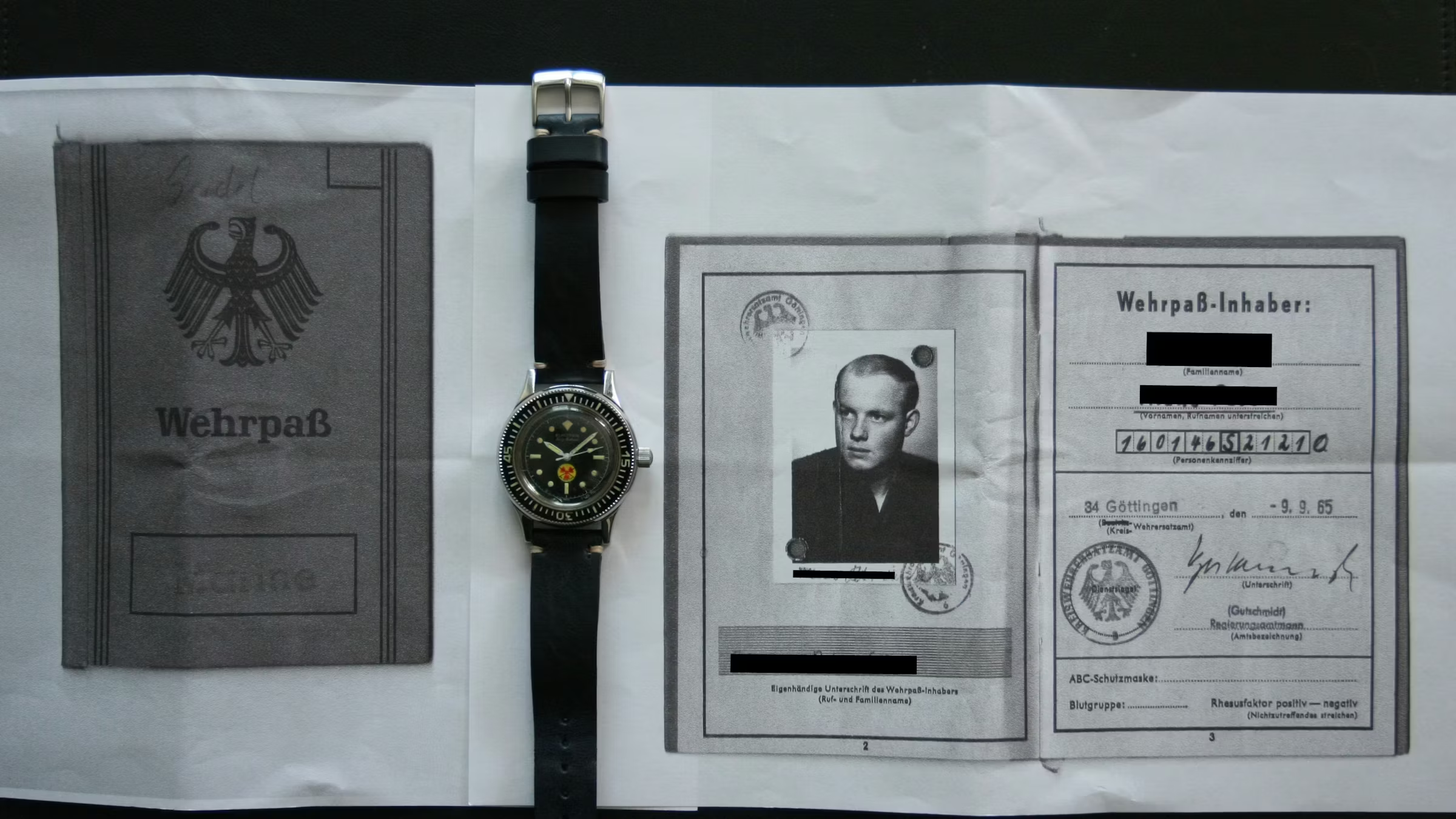
There are certain watches that benefit from being written about frequently. The Blancpain Fifty Fathoms is not one of them. Repetition has flattened it. The more it is cited as “the first modern dive watch,” the less its internal logic is examined. The Fifty Fathoms has become a reference point without being treated as a reference system, and that distinction matters.
This article exists for a specific reason and a specific audience. It is not an introduction. It is not an anniversary celebration. It is not an attempt to convince anyone of the importance that has already been established. It is written because certain watches deserve to be approached with the same analytical discipline we reserve for complicated chronographs, perpetual calendars, or early Geneva chronometric experiments. The Fifty Fathoms belongs in that category, not because of romance or heroism, but because it is one of the very few wristwatches whose architecture directly shaped an entire category without ever being fundamentally improved upon.
This project was only possible because accuracy mattered more than narrative convenience. Blancpain’s involvement here was not commercial/lucrative but corrective. Miss Patricia Cruz Orad and the team at Organic Path Communication provided access to primary documentation and internal clarifications that allowed this text to avoid approximation. Miss Alexandra Sminchise, through the Madrid boutique, acted as the human bridge that ensured this work remained grounded in facts rather than received lore. That matters because the Fifty Fathoms has suffered more than most watches from retrospective storytelling.
The Fifty Fathoms did not emerge from a design studio. It emerged from a problem. In the early 1950s, professional diving was evolving faster than the instruments designed to support it. Mechanical wristwatches existed. Waterproof watches existed. Timing underwater operations existed as a need. What did not exist was a wristwatch conceived from the outset as a unified solution to underwater timing, legibility, and reliability under pressure. Blancpain did not invent diving. It did not invent waterproofing. It assembled a coherent hierarchy of priorities.
The only way to understand how successful that hierarchy was is to follow the references in sequence. I’ve built myself quite the reputation (among my humble circle of watch nerd friends) of being “the one who digs”. The one who digs deep, looking into and for the watches/references that are painfully not “hyped”.
I’m not pretending to be a Blancpain Fifty Fathoms messiah, I mean, look at the brand’s presence in the Asian market. However, I certainly hope that 1 or 2 out of the many watch collectors and enthusiasts this is directed to, get the spark I have for the Blancpain Fifty Fathoms.
So let’s trace this icon’s journey.
Fifty Fathoms Early Production 1953–1954
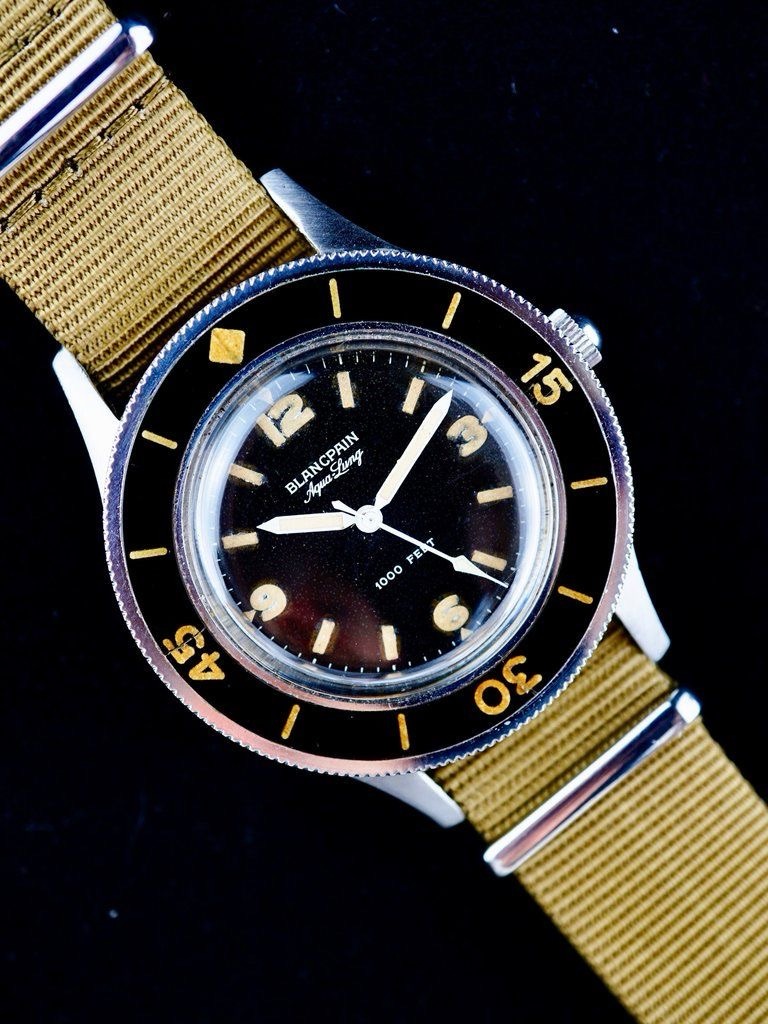
The earliest Fifty Fathoms pieces were produced in very small numbers beginning in 1953, under the direction of Jean-Jacques Fiechter. These watches were not formally referenced in the modern sense. They were built around requirements communicated by professional divers, notably Robert Maloubier and Claude Riffaud of the French Navy.
The cases measured approximately 41 mm in diameter. Yes, oversized for the period but mechanically justified. Thickness was substantial, driven by pressure resistance rather than visual proportion. Casebacks were screwed and often engraved, depending on the intended recipient. Water resistance was rated to fifty fathoms, approximately 91 meters, a figure that was conservative relative to real-world performance.
Ps: A fathom is a nautical unit equal to six feet (approximately 1.8 meters).
The dial design established the language permanently. Matte black surface. Large Arabic numerals at the quarters. Rectangular indexes elsewhere. Heavy radium application. There is no evidence of aesthetic balancing. Every decision was towards contrast. The bezel is bidirectional, friction-mounted, with a Bakelite insert allowing radium markings to be visible in low light. This material choice would later prove fragile, but at the time, it was functionally unmatched.
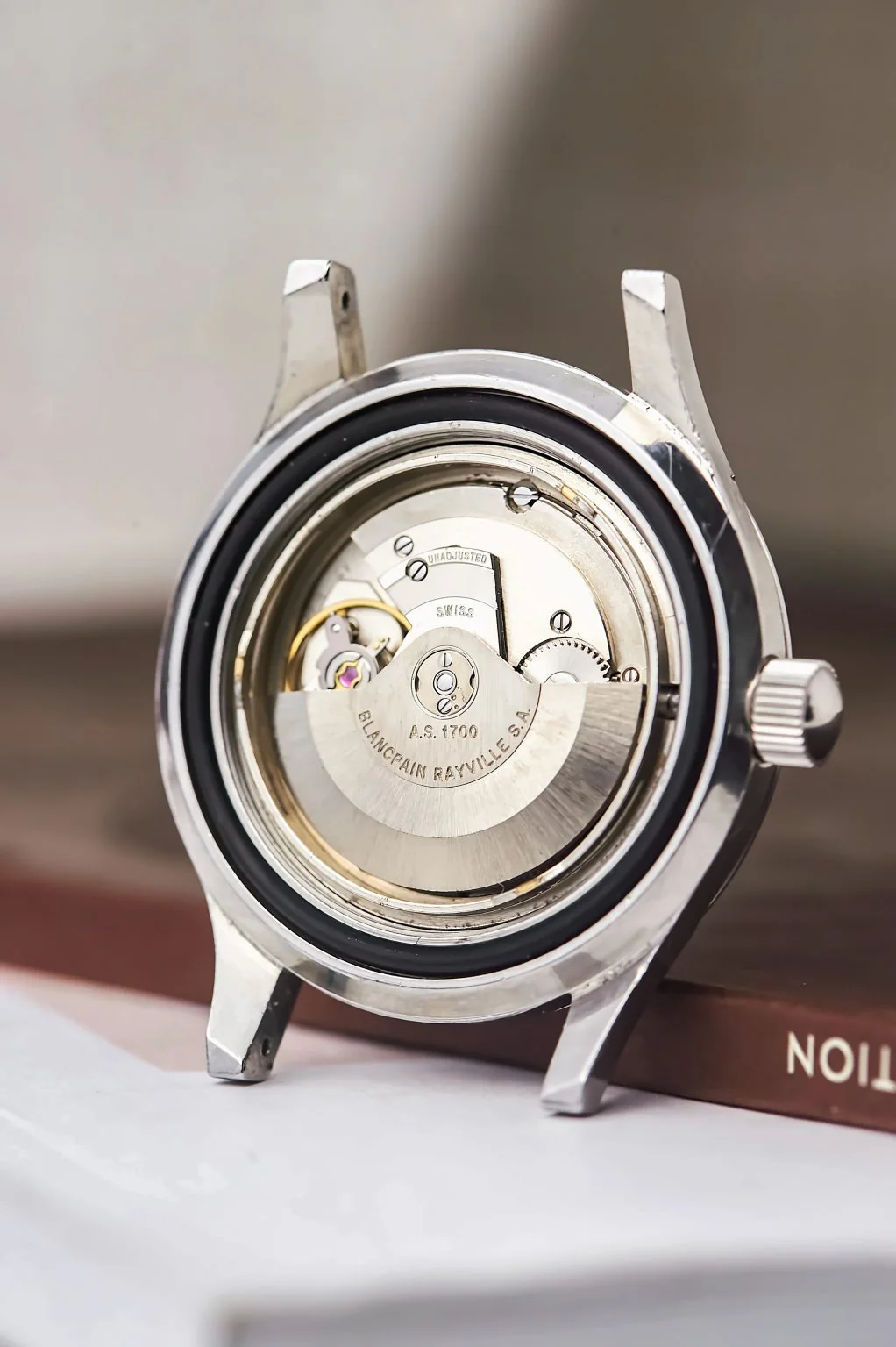
Movements varied, but the selection criteria were reliability and automatic winding.
Fifty Fathoms MIL-SPEC U.S Navy 1954–1959
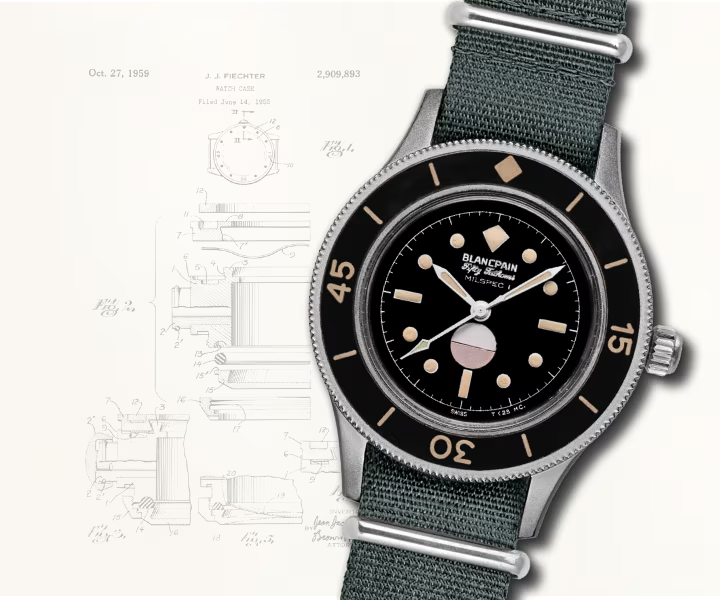
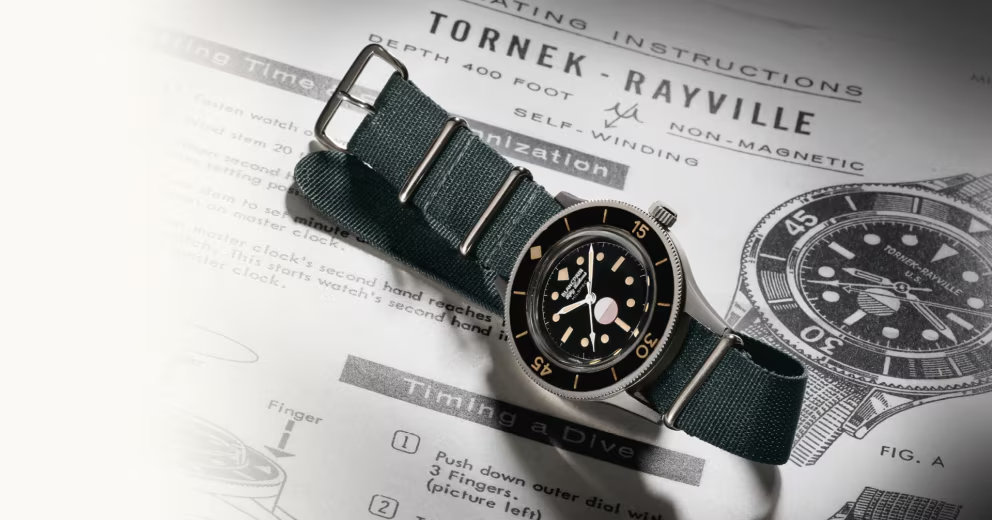
Following early trials, Blancpain supplied the United States Navy’s Underwater Demolition Teams with a modified Fifty Fathoms that would later be designated MIL-SPEC. This reference introduces the moisture indicator at six o’clock, a feature unique in dive watch history.
The moisture indicator consists of a bicolored disc designed to change appearance if humidity enters the case. Its purpose is diagnostic, not decorative. It allows the diver to identify a compromised watch before a dive. This feature alone places the MIL-SPEC Fifty Fathoms in a different intellectual category than most tool watches. It does not assume mechanical perfection. It communicates mechanical status.
The dial retains Arabic numerals. Lume remains radium. The bezel remains Bakelite. The movement is typically an A. Schild automatic caliber selected for robustness, for shocks and whatnot. These watches represent the Fifty Fathoms at its most functionally honest form.

Fifty Fathoms Bundesmarine No Radiation 1956–1963
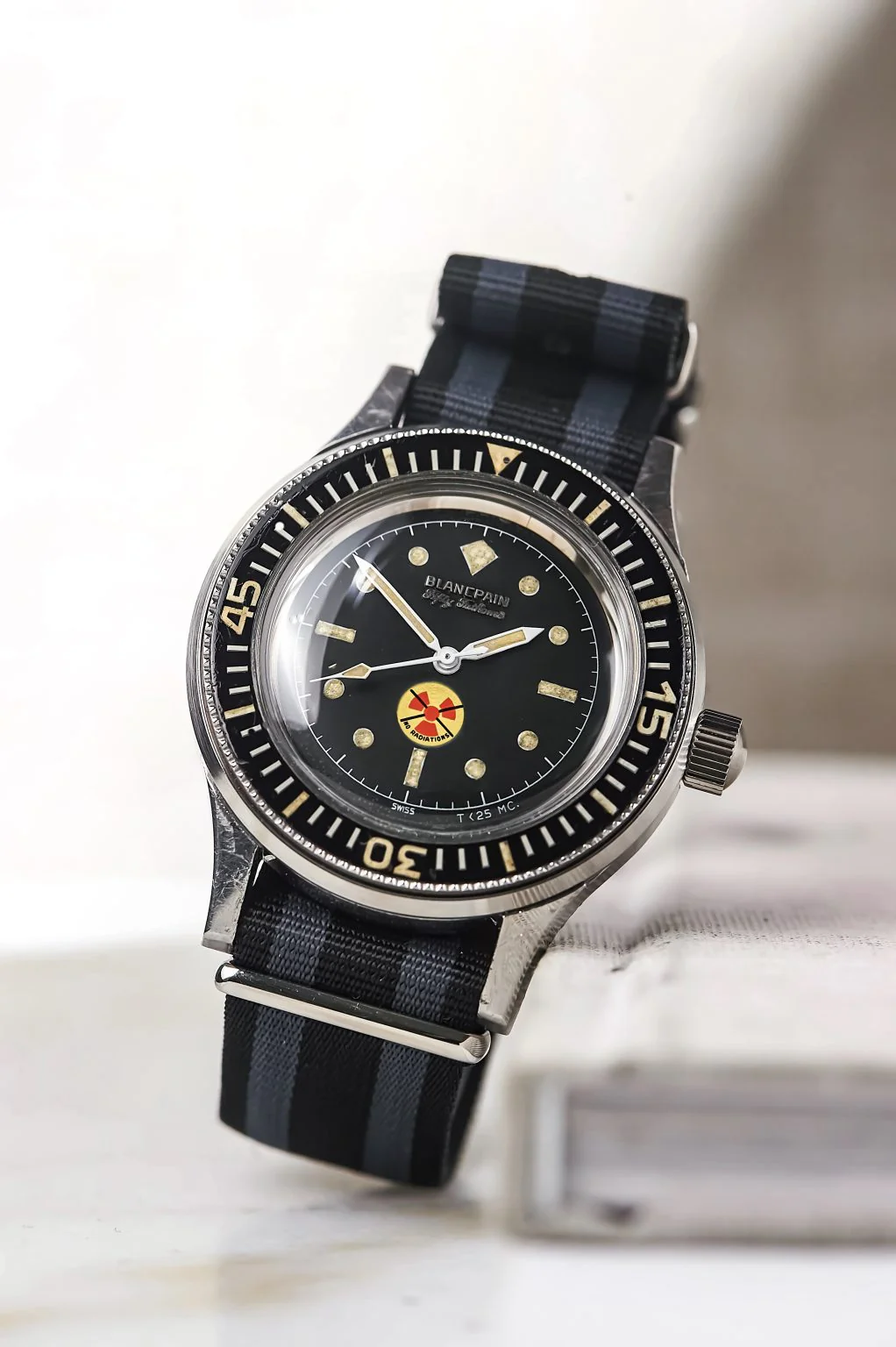
In parallel, Blancpain supplied the German Bundesmarine with a distinct execution. These watches abandon Arabic numerals entirely, replacing them with oversized luminous plots and stark geometric indexes. The result is an even more immediate reading experience.
The case construction remains similar but often heavier. Bezels become slightly more pronounced. The intent is clarity under stress, not versatility. These references demonstrate the adaptability of the Fifty Fathoms architecture without dilution.
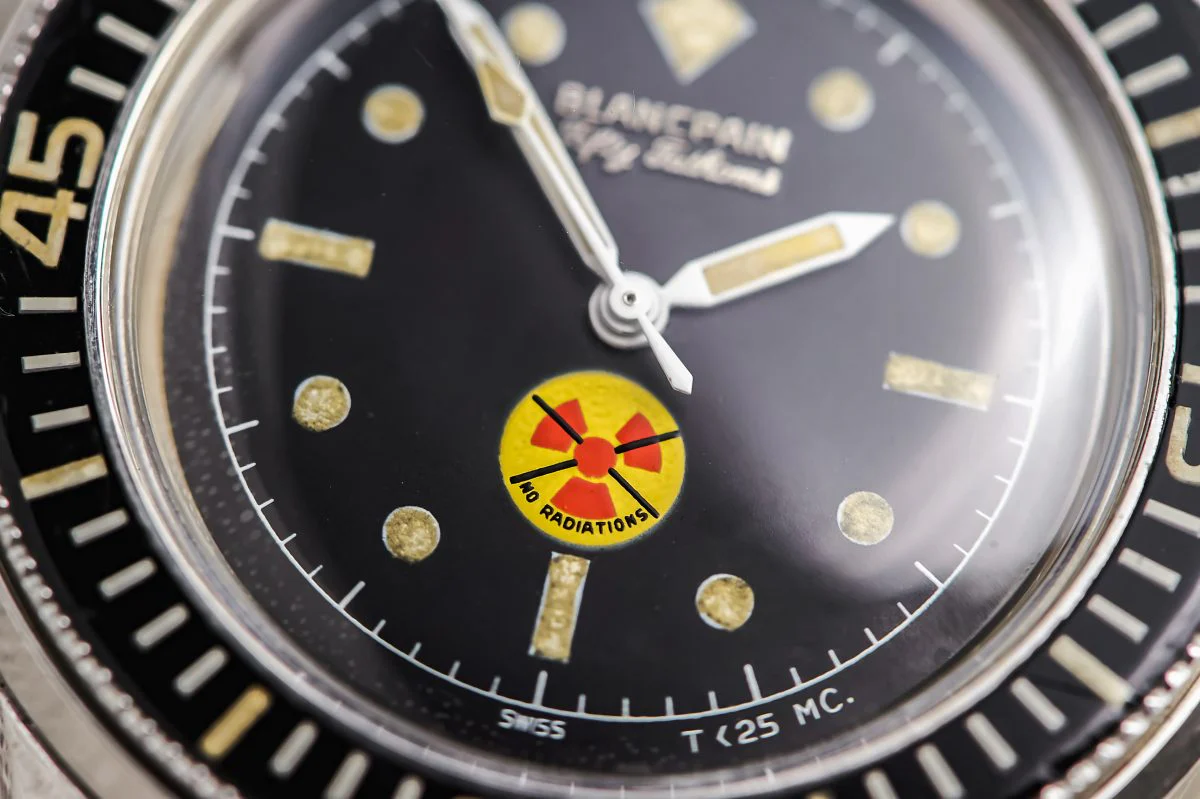
As awareness of radioactive materials increased, Blancpain introduced dials marked with a crossed-out radiation symbol. These references replace radium with safer luminous compounds.
The significance of the No Radiation Fifty Fathoms is contextual rather than technical. The watch now responds to civilian regulation rather than military necessity. Importantly, the dial architecture does not change. Blancpain does not soften the design to appeal to a broader market. It adjusts materials and nothing else.
Fifty Fathoms Civilian Late Production 1963–1969
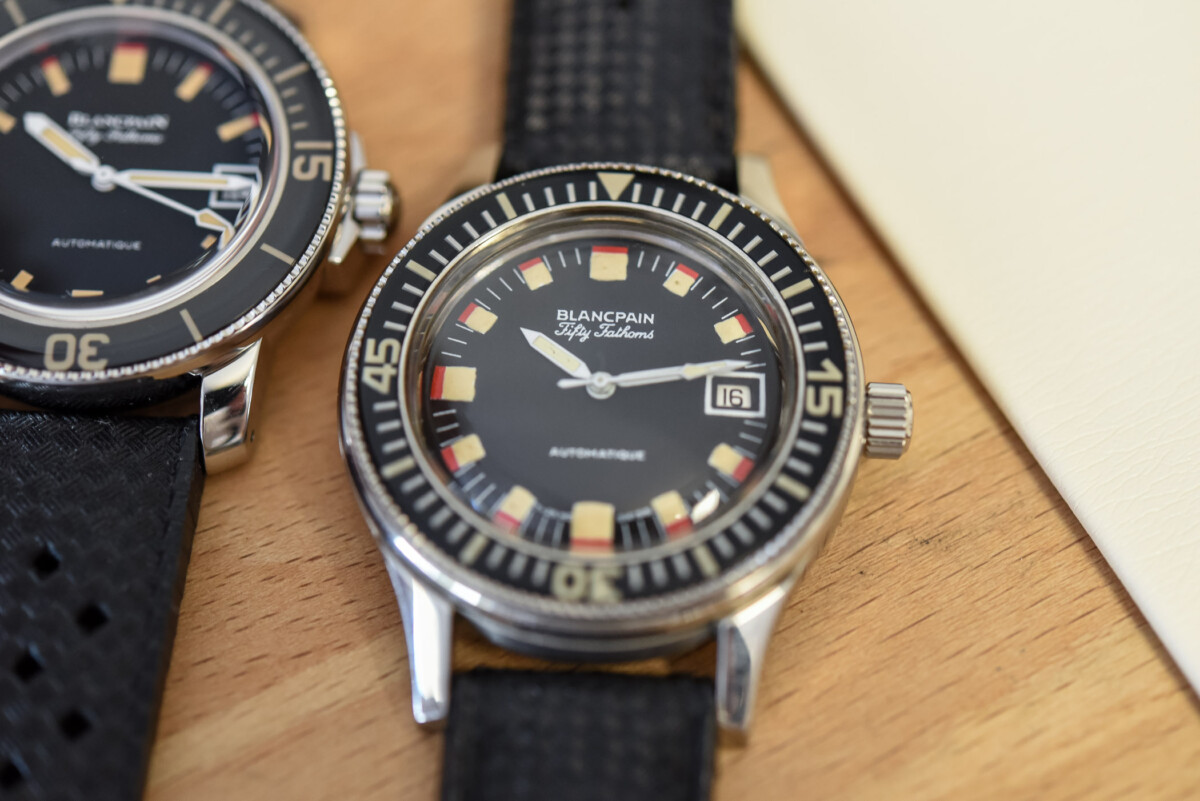
Later civilian references show minor refinements in finishing and dial execution. Bezels transition away from Bakelite. Case tolerances improve. These watches are often mistaken for stylistic evolutions. They are not. They represent stabilization.
The Fifty Fathoms at this stage is no longer experimental. It is a mature instrument produced within commercial constraints. Good ? Bad ? Who knows. But this is the step that got us to where we are now: Making a guide about the Fifty Fathoms, as a piece to be collected.
Dormancy and Discontinuation 1970s–1990s
The Fifty Fathoms disappears during the quartz era.
Blancpain is a company that has vowed to never make a quartz watch. A promise they kept.
This absence should not be dramatized. A mechanically intensive tool watch cannot compete in a market driven by convenience and cost. Blancpain did not compromise the concept to survive. It waited. If you dig just enough, you’ll find that even Rolex and more legendary brands, were obliged to compromise.
Fifty Fathoms 50th Anniversary 2003
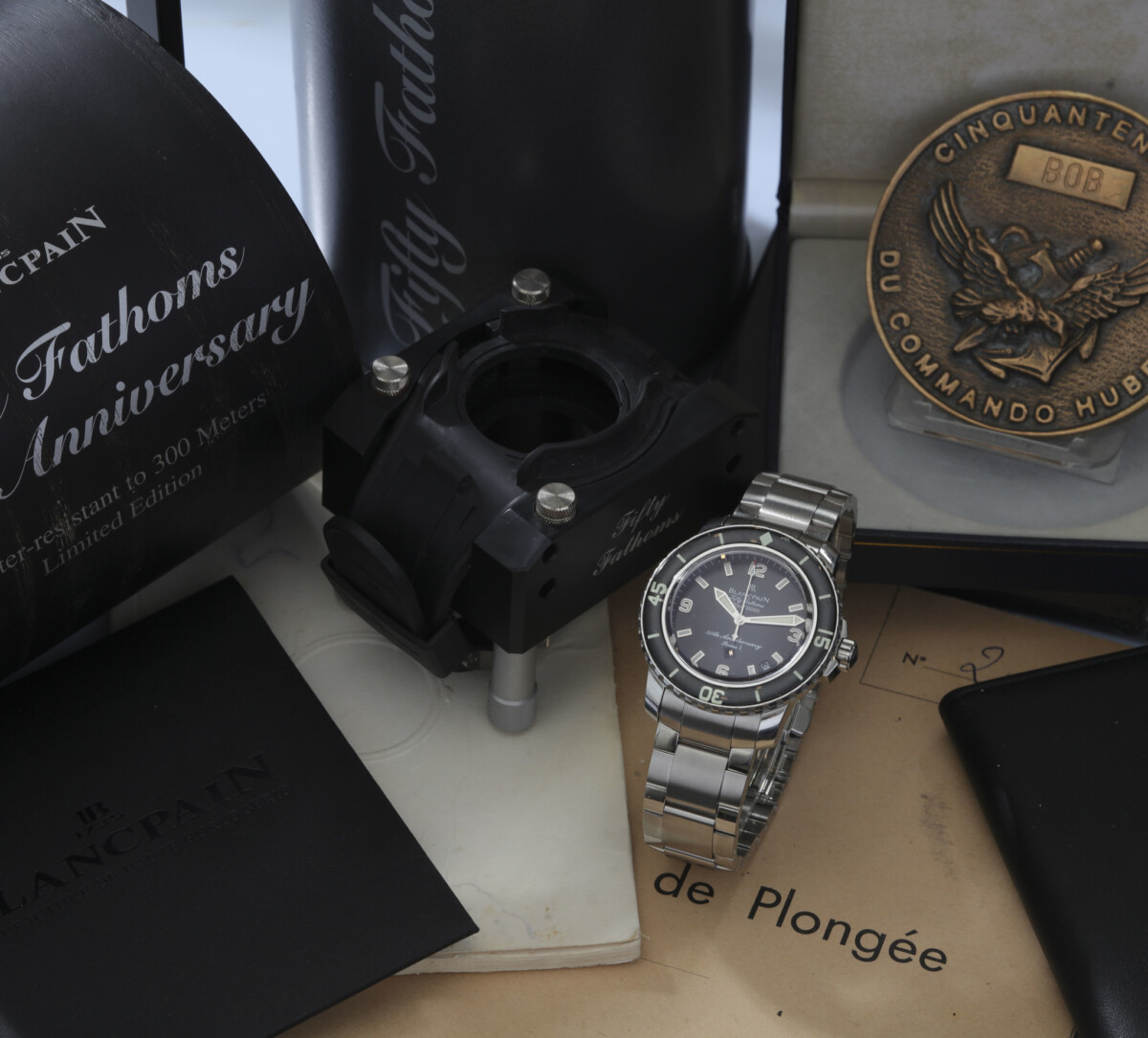
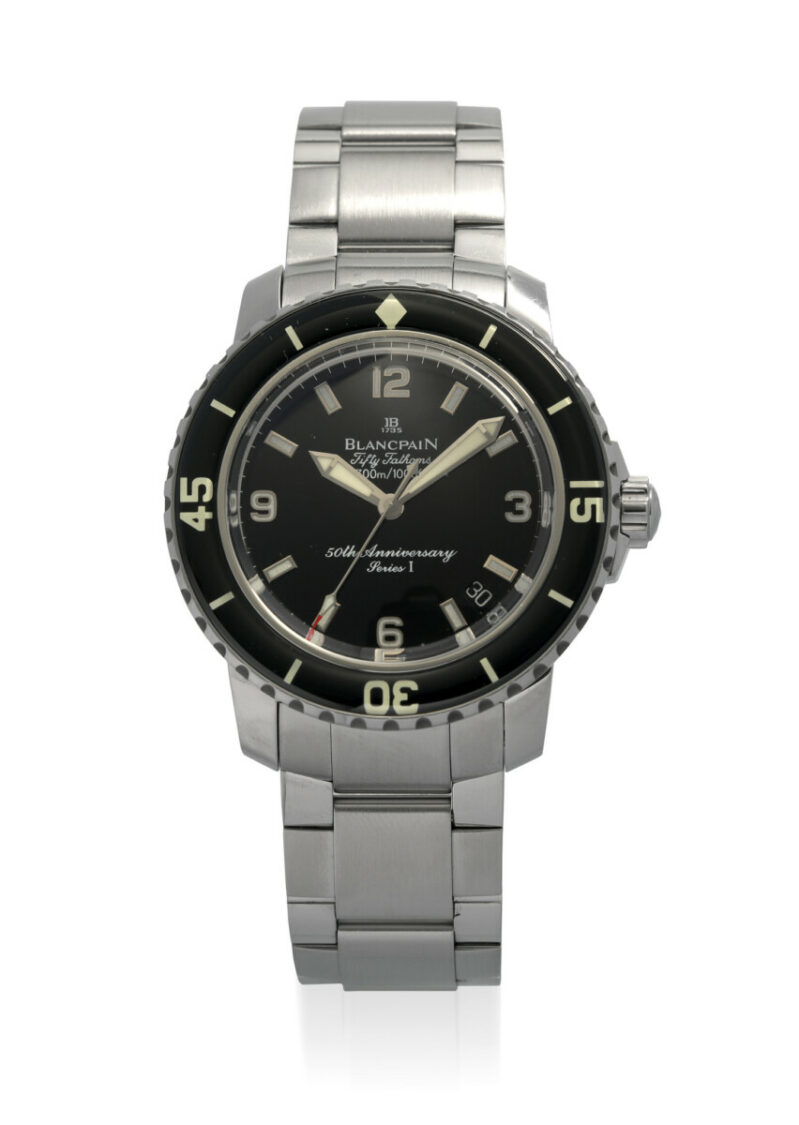
Blancpain reintroduces the Fifty Fathoms in 2003, with three limited editions of fifty pieces each. These watches are not recreations. They are proofs of relevance. Materials are modernized. Finishing is elevated. The architecture remains intact.
These references test whether the original logic can survive modern expectations: It does.
Fifty Fathoms Automatique Ref. 5015, 2007
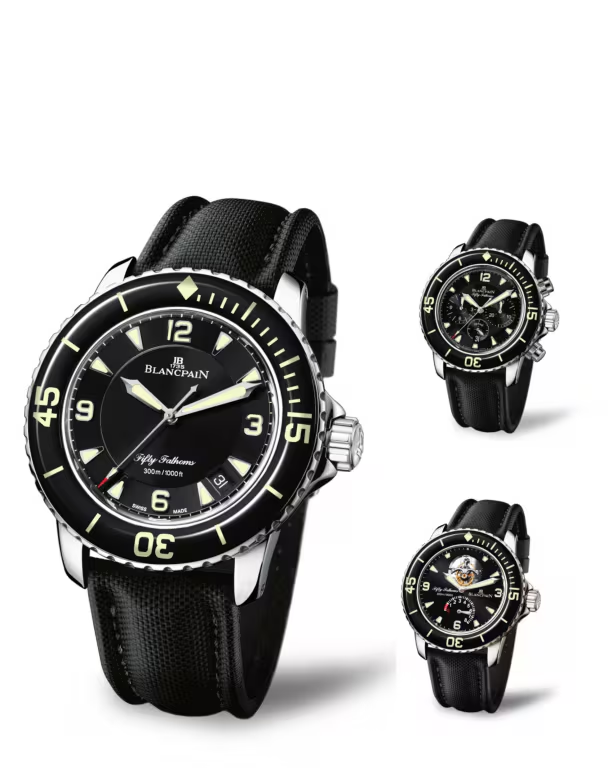
The true modern Fifty Fathoms arrives in 2007 with the introduction of the 5015. Case size increases to 45 mm. The bezel becomes sapphire-covered ceramic. The movement is the in-house calibre 1315, featuring three barrels and extended power reserve.
Every change is functional. The size increase preserves dial legibility. The bezel material solves durability issues. The movement prioritizes torque stability. This reference does not reinterpret the Fifty Fathoms, it updates its engineering assumptions.
Fifty Fathoms Bathyscaphe 2013
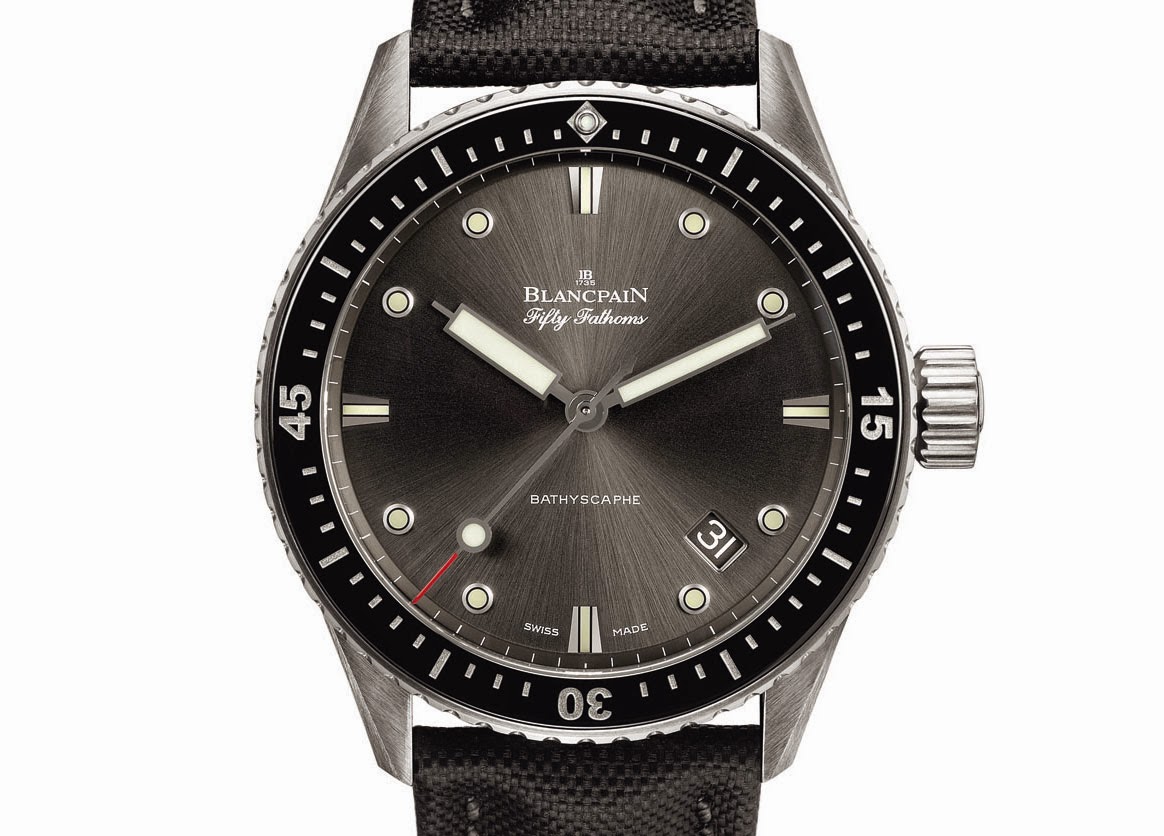
The Bathyscaphe introduces a more restrained case profile and modern materials such as ceramic and titanium. The movement shifts to the calibre 1315 or 1150 depending on configuration.
This reference tests whether the Fifty Fathoms language can be reduced without losing coherence. It largely succeeds, though it marks the beginning of aesthetic diversification.
Fifty Fathoms X Fathoms, 2011
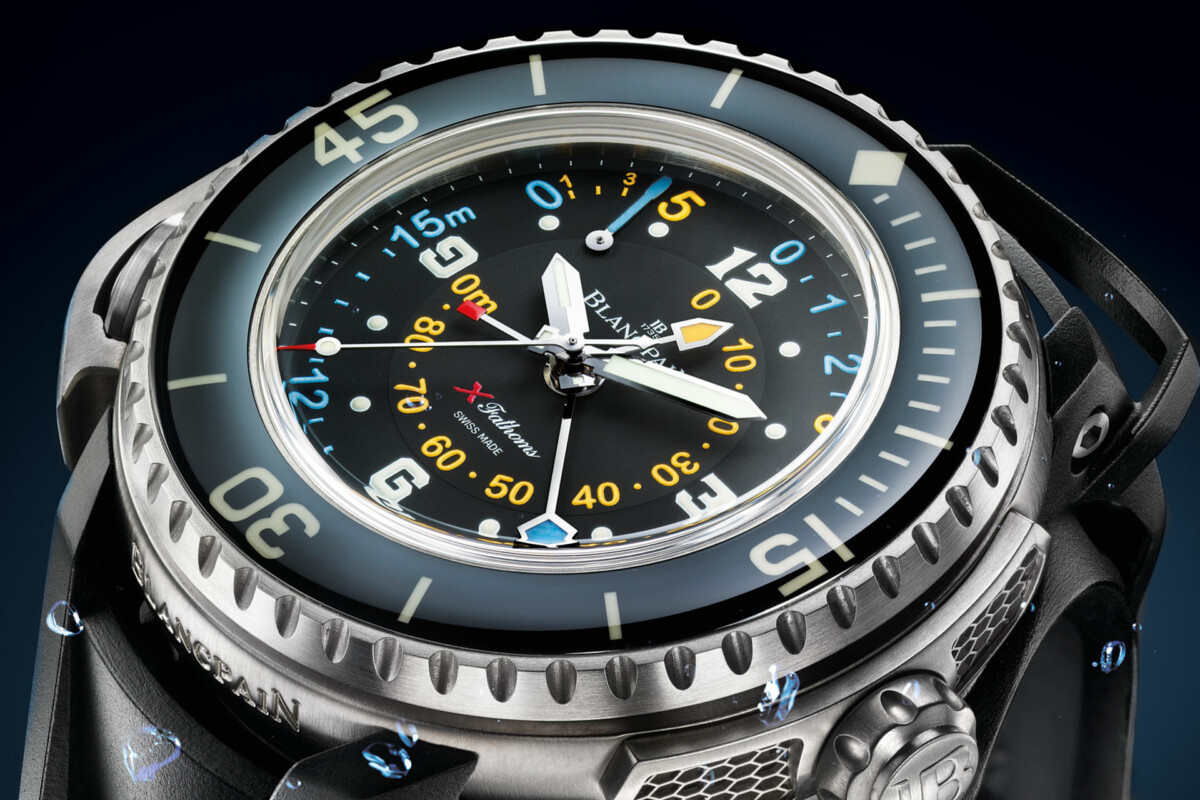
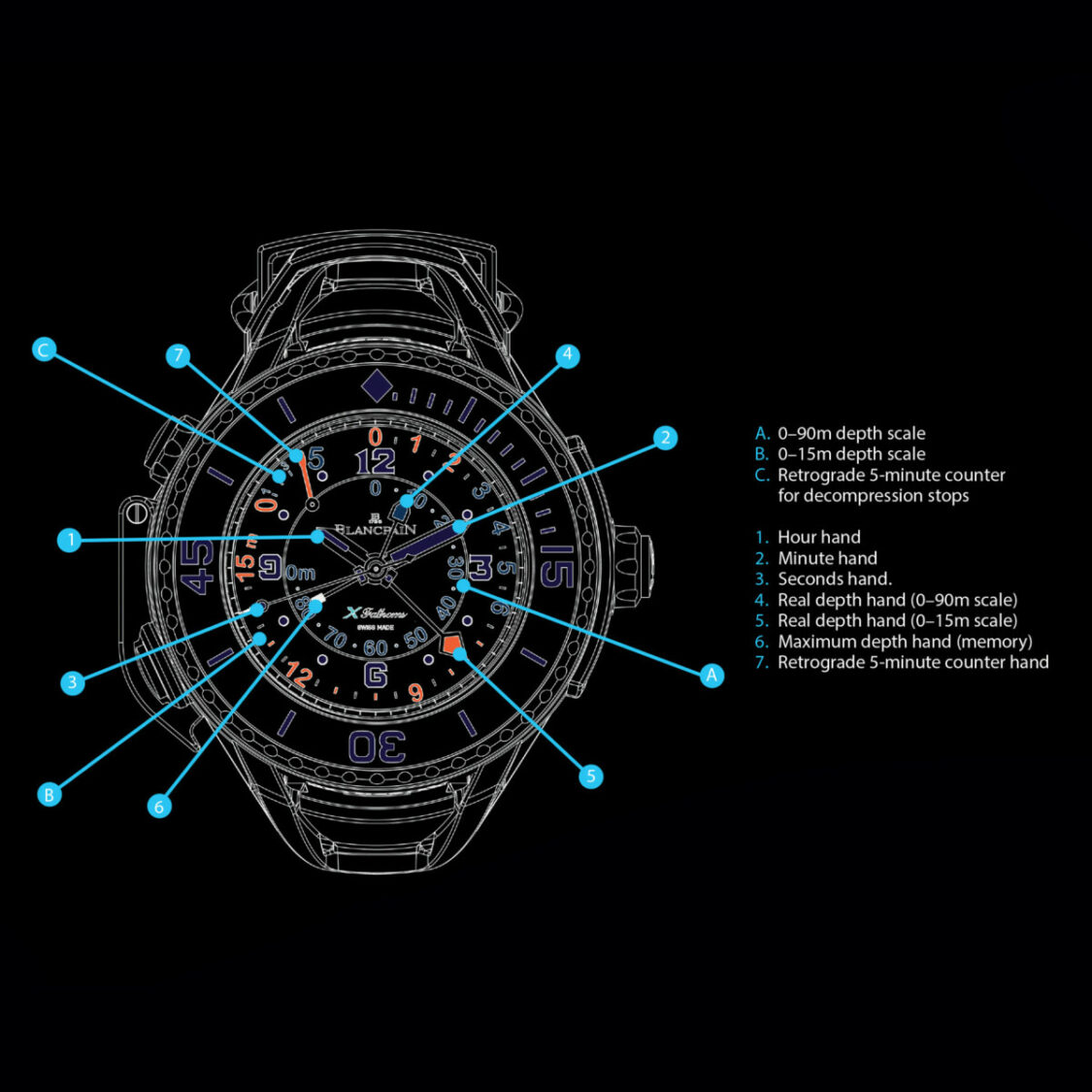
The X Fathoms pushes technical experimentation with a mechanical depth gauge and decompression indicators. It is not historically faithful, but it is conceptually aligned. It treats the Fifty Fathoms as an experimental slate rather than an ancient relic.
Fifty Fathoms 70th Anniversary 2023
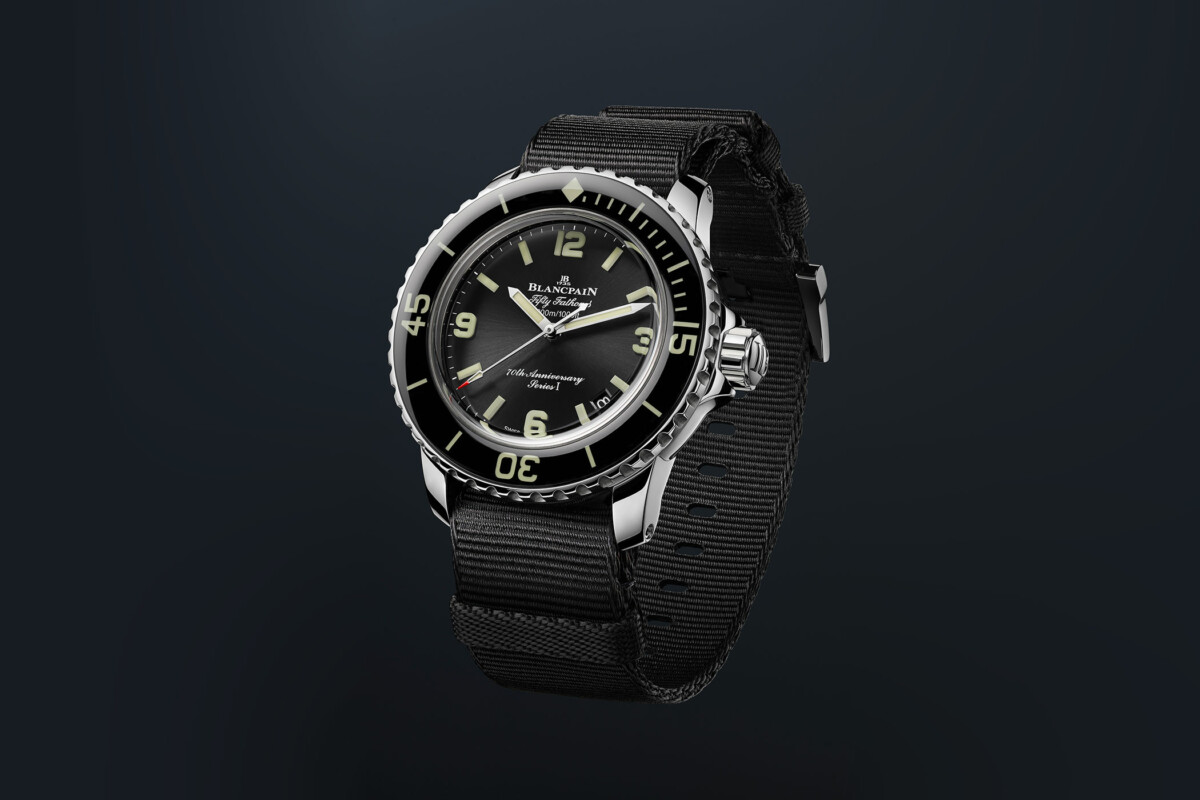
The 70th anniversary releases revisit historical proportions while integrating modern materials and movements. These references consciously look backwards, but without surrendering modern reliability.
Fifty Fathoms 42 mm Steel 2025
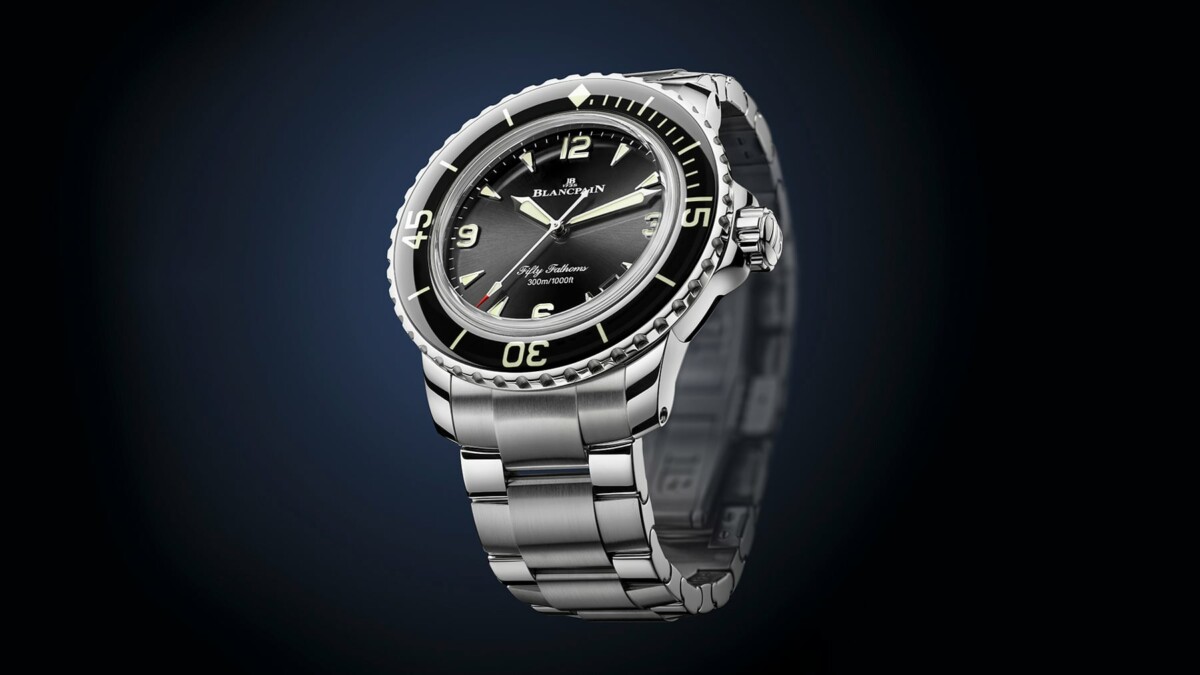
The introduction of a 42 mm steel Fifty Fathoms into the permanent collection represents a recalibration. It acknowledges contemporary wearability without revising the original hierarchy of priorities. This is not a concession. It is an adjustment.
Another 38 mm configuration was released and let me tell you, that’s something I’d gladly buy and add to my personal collection.
The Fifty Fathoms endures not because it is “first”, but because it is complete.
And although the company is not as hyped as it deserves to be, Blancpain is a brand we desperately need in today’s “watch world”.
Why ? Let’s not forget that Blancpain is the oldest standing watch brand today. Since 1735. And even with a surface level attempt of research, one would understand the brand’s commitment to real horology. The Villeret collection is a direct and exact reflection of this. Minute repeaters, skeletonized grand complication pieces, perpetual calendars… etc.
Alongside Breguet, Blancpain is a statement to the Swatch group’s potential as market leaders.
This will not be the last time we dissect an icon at this level. Some watches deserve surface treatment, yet others demand excavation. The Fifty Fathoms belongs firmly in the second category, and I hope to see more of them on your wrists, now that you understand the piece’s journey.
Thank you team Blanpain, Spain.

SUBSCRIBE NOW AND NEVER MISS A THING !