
Mr. Hader — Beda’a’s founder — didn’t show me this watch before its release. Not even a glimpse.
Which, if you read any other article of mine about Beda’a, usually means one thing: it’s gonna be epic. There’s no halfway presentation, no “what do you think of this direction?” moment. We’ve had enough conversations over our friendship, going back to my time in Dubai, for me to recognize when something is being built with intent versus when it’s playing safe or extending something that’s usual. That silence already framed the watch before even seeing it. Even the teaser video was dreamy.
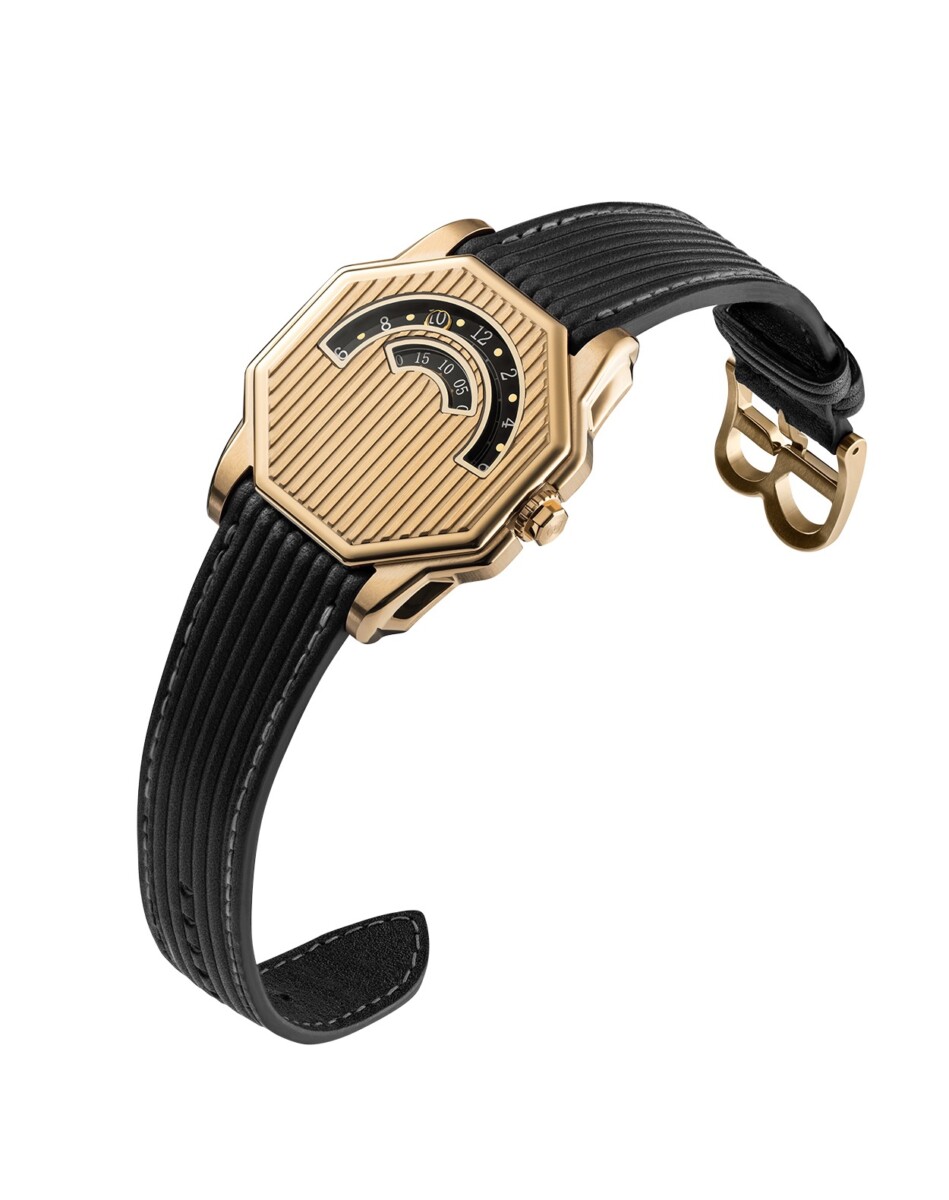
Because the Angles Guichets is not an isolated release. It sits inside a short but already structured trajectory for the brand, and more specifically for the Angles line, which has become Beda’a’s core design platform in under three years. What’s important to understand is that this is not just “a new model with a complication.” It’s the first time the Angles architecture is forced to deal with the constraints of an aperture display, which is a completely different problem than a central-hand or small seconds watch.
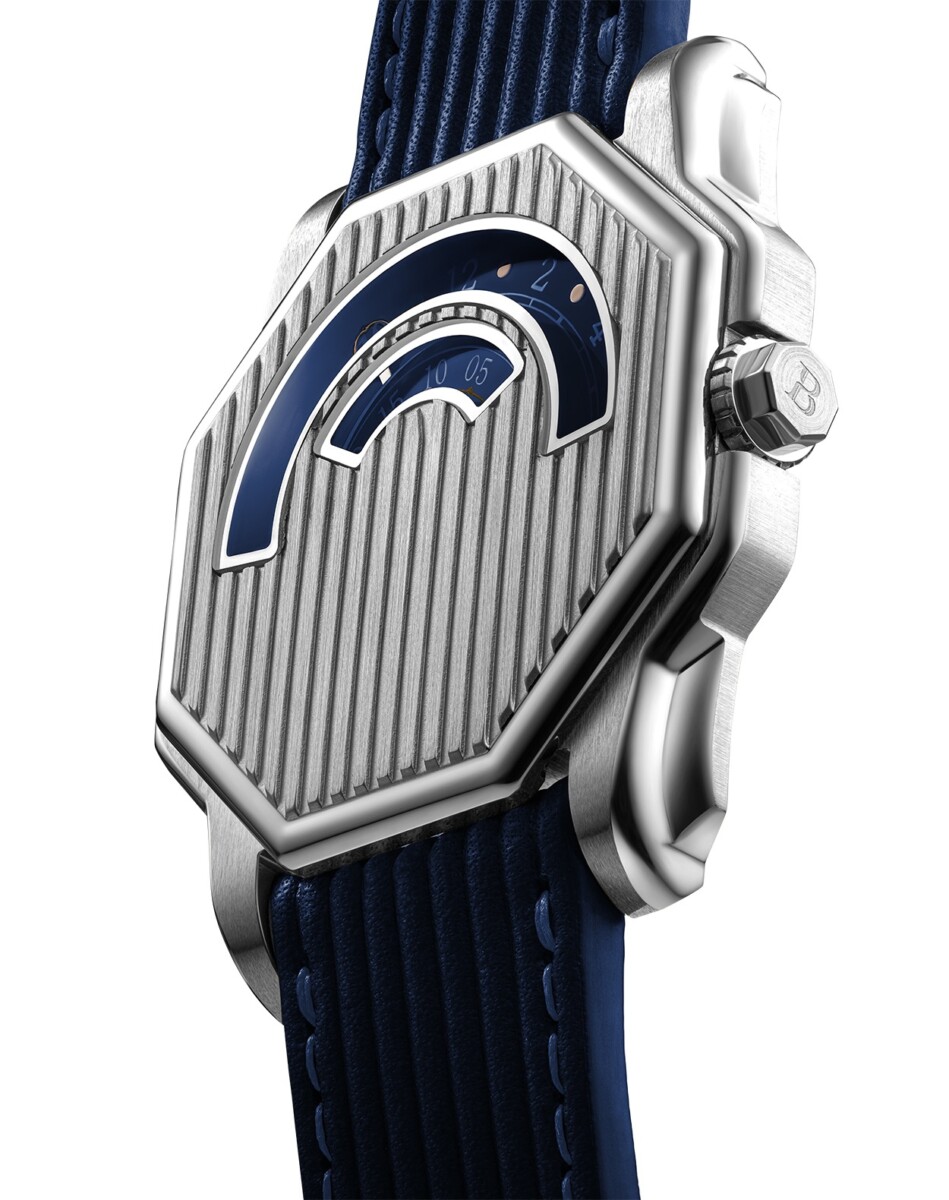
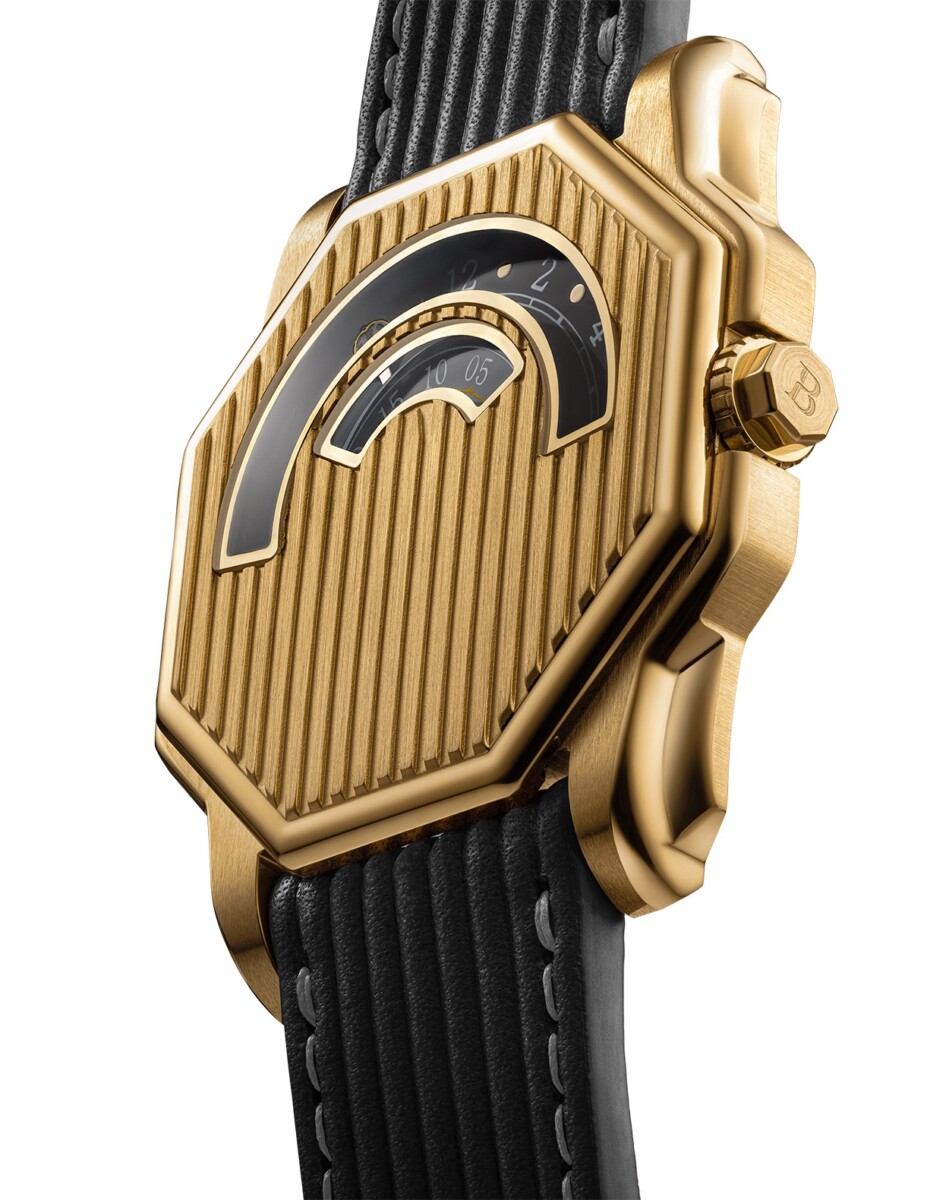
The Angles case is already established at this point. You’re dealing with a 37 mm format, but more importantly a multi-plane octagonal construction with three distinct stepped levels. It’s not a flat octagon in the Gérald Genta sense, and it’s not trying to echo the Royal Oak or Nautilus lineage. The geometry is sharper, more segmented, and it integrates the lugs into the case body in a way that removes the visual break you typically rely on to reset proportions. That becomes critical here because once you remove hands and most dial furniture, the case becomes the primary and only visual regulator of the watch.
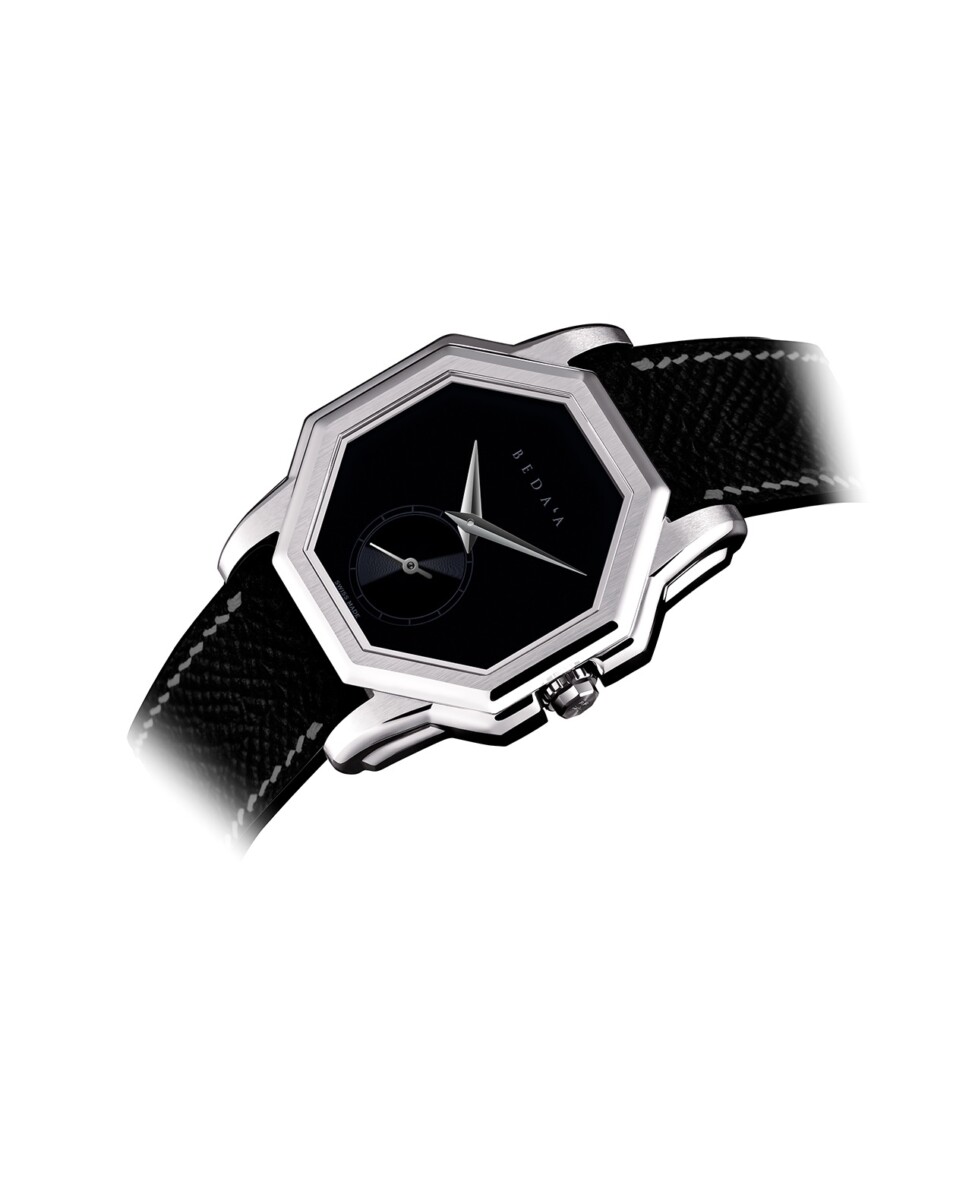
Previous Angles executions had hands, a clear hierarchy between dial and case, and enough familiar elements to stabilize the composition. With the Guichets, that hierarchy disappears. The dial becomes a surface with two apertures, and everything else has to carry meaning through proportion, alignment, and negative space. This is where Sohaib Maghnam’s involvement becomes obvious, not in a superficial way, but in how controlled the watch feels. He is Beda’a director and designer after all.
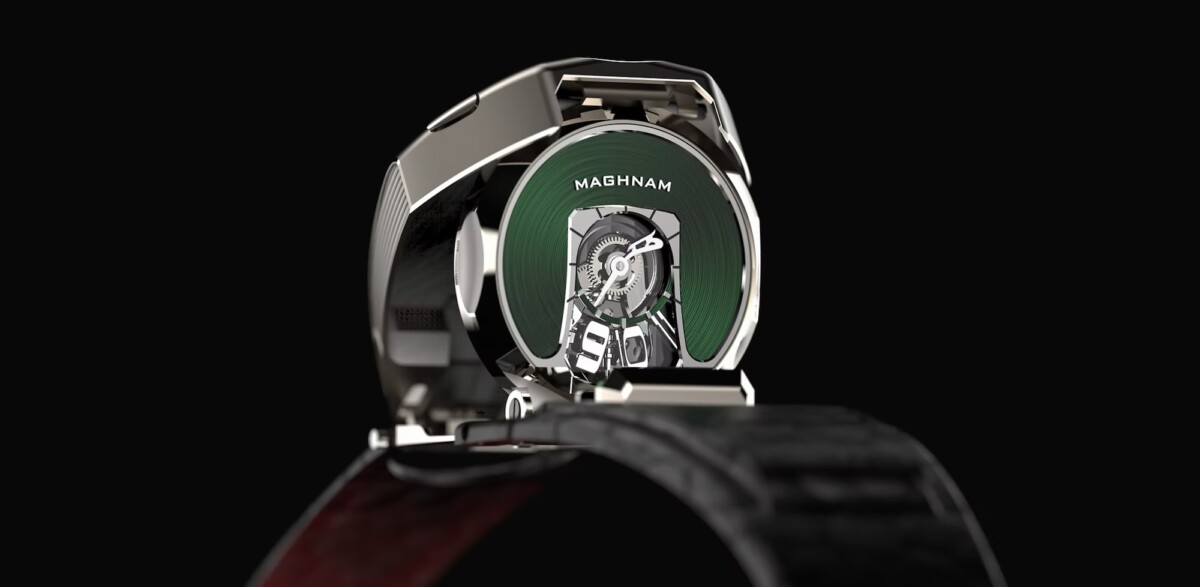
If you’ve followed his work under his own name, you already know he doesn’t design in a “traditional” fashion. His watches are about geometry, futuristic elements, and a very deliberate use of empty space. That language translates directly here, but under much tighter constraints, because aperture watches are unforgiving.
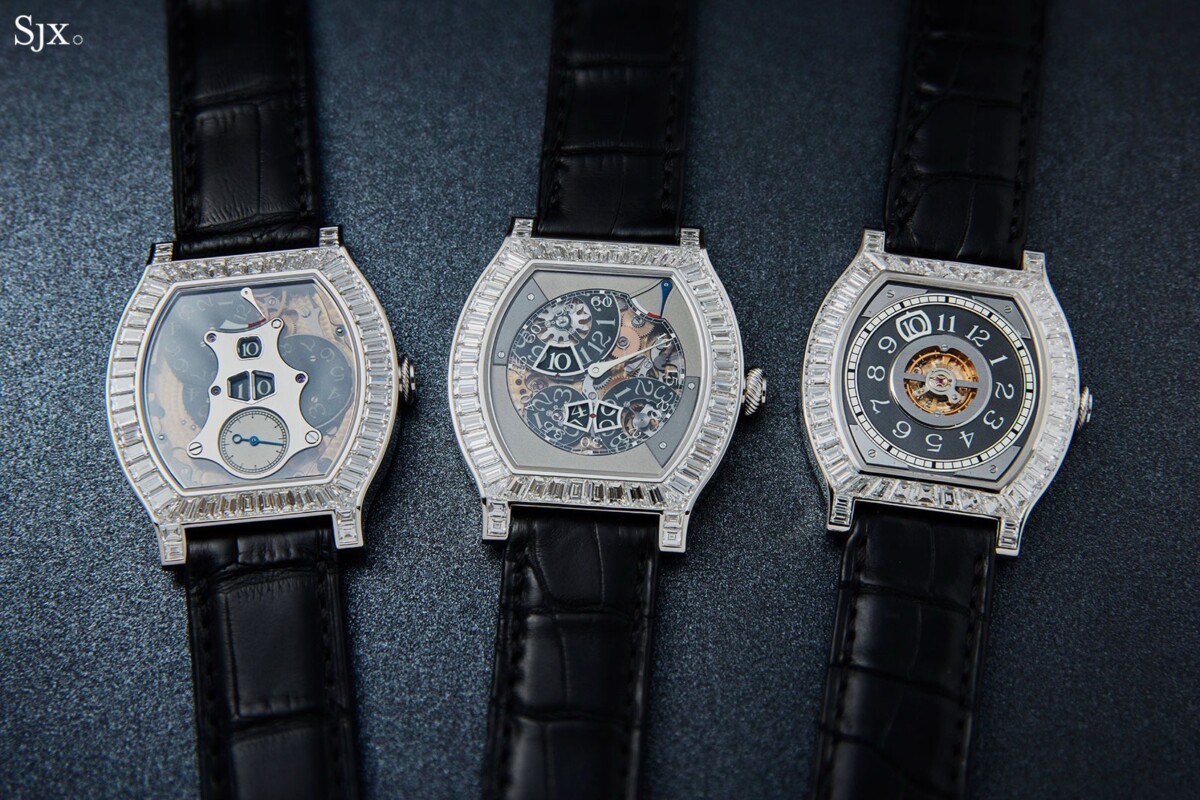
Historically, they’ve always been a niche within watchmaking. Early 20th century pocket and wristwatch executions experimented with digital-style displays, but it’s really with pieces like the Cartier Tank à Guichets that the format becomes codified. You reduce the watch to windows, remove hands entirely, and force time to be read through apertures alone. Later interpretations, like the Audemars Piguet Star Wheel or F.P. Journe Vagabondage, take that concept further mechanically, but they all share the same constraint: once you remove hands, the case is everything. Alignment, spacing, and motion all become immediately visible.
Beda’a approaches this through a relatively low-key technical base, which is where things get more interesting than they first appear. They’re using a modified Peseux 7001, one of the most respected ultra-thin hand-wound calibres still in circulation. At around 2.5 mm thickness, it has been used across independent watchmaking precisely because it offers a stable, slim foundation. A characteristic of the Angles collection.
Here, the gear train has been modified to run on a 24-hour cycle, effectively halving the rotational speed of the hour wheel. That changes the behavior of the entire system. When you alter ratios like that, especially in a manually wound calibre with a 42 hour power reserve, torque distribution becomes a real consideration. And that’s before accounting for the fact that you’re now driving discs instead of hands, which introduces additional inertia.
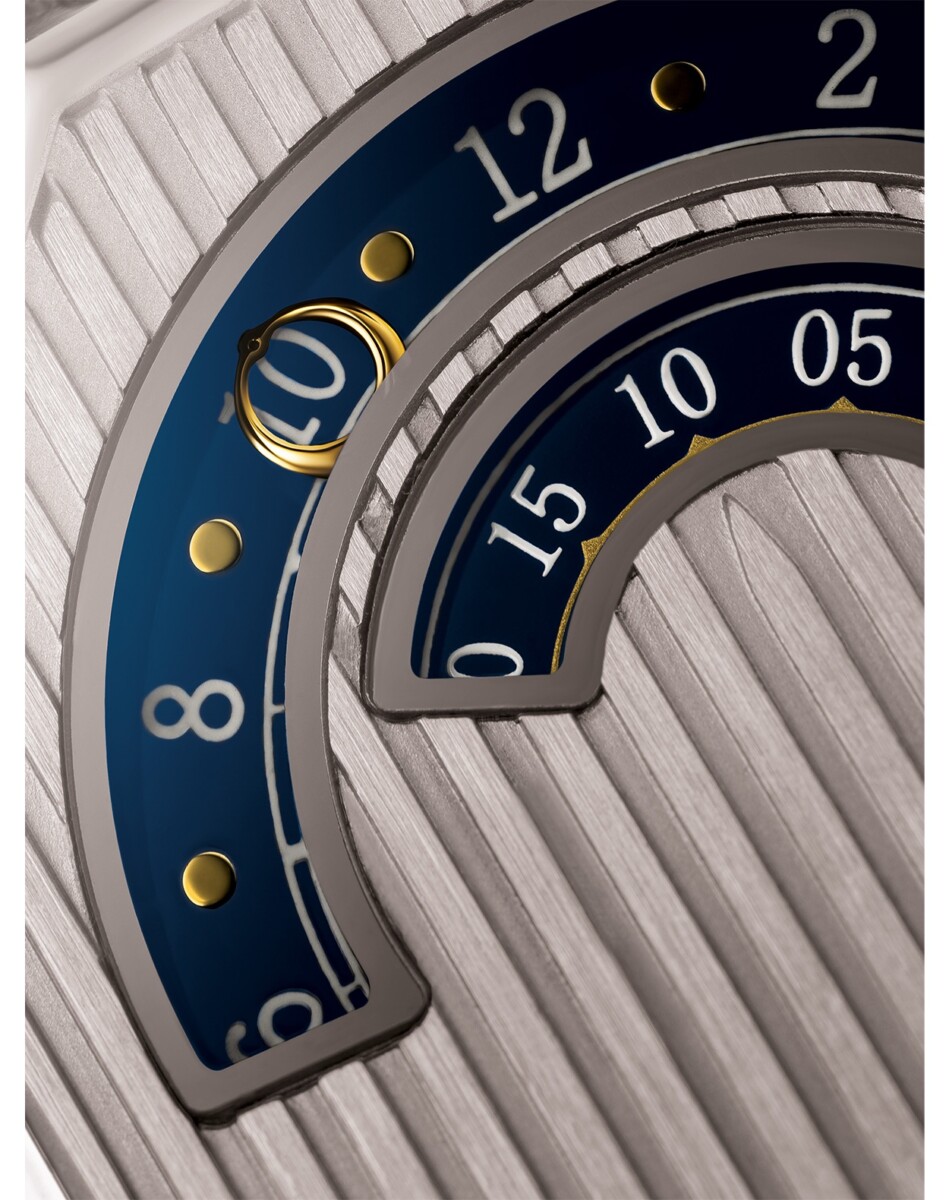
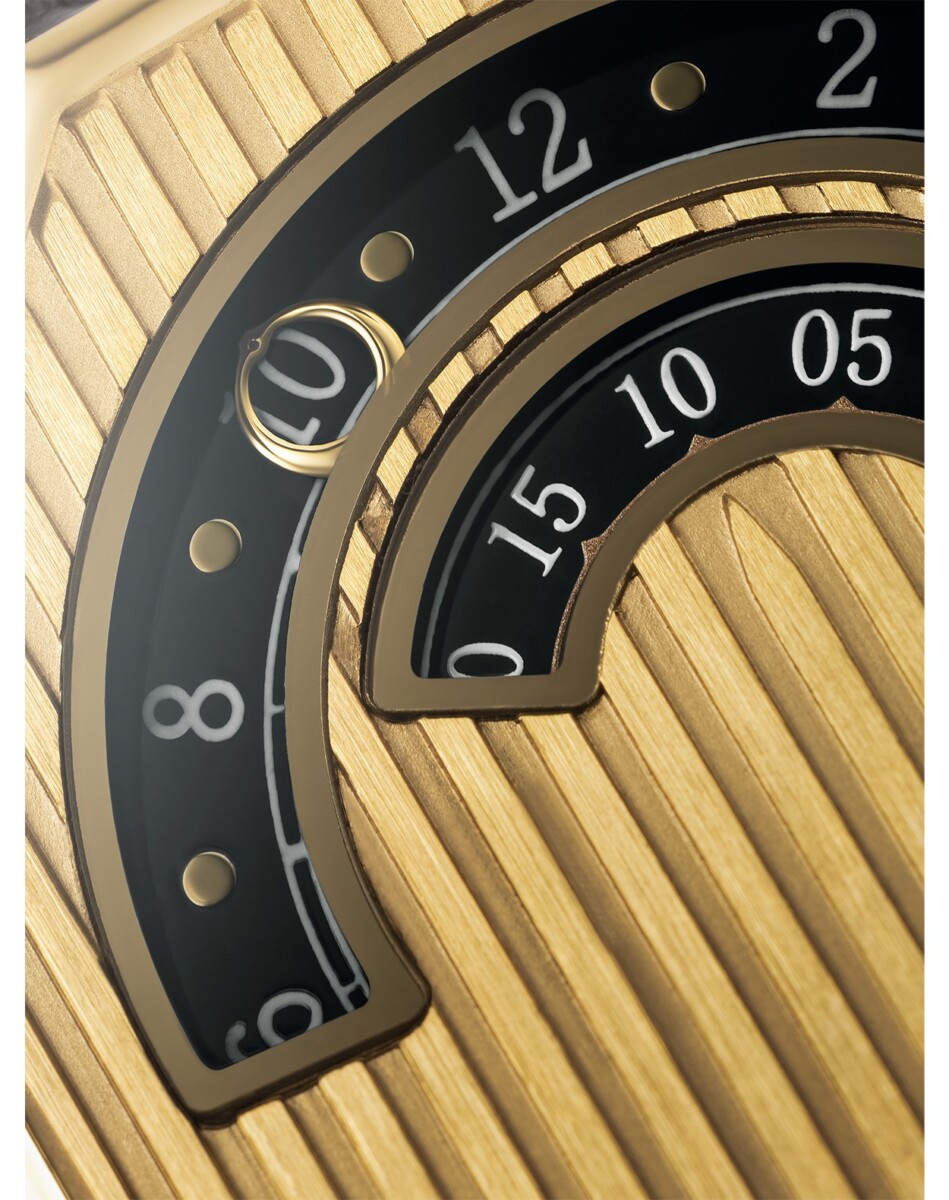
The display itself confirms that this is not a traditional jump hour watch. The upper aperture uses a continuous 24-hour disc where the sun and moon travel across a scale from 6 AM to 6 PM, then transition into night. Mechanically, this places the watch closer to a rotating disc display than to an instantaneous jumping system. There’s no sharp jump, no snappy transition. Instead, the indication is progressive, almost imperceptible, which aligns with the conceptual approach of the watch.
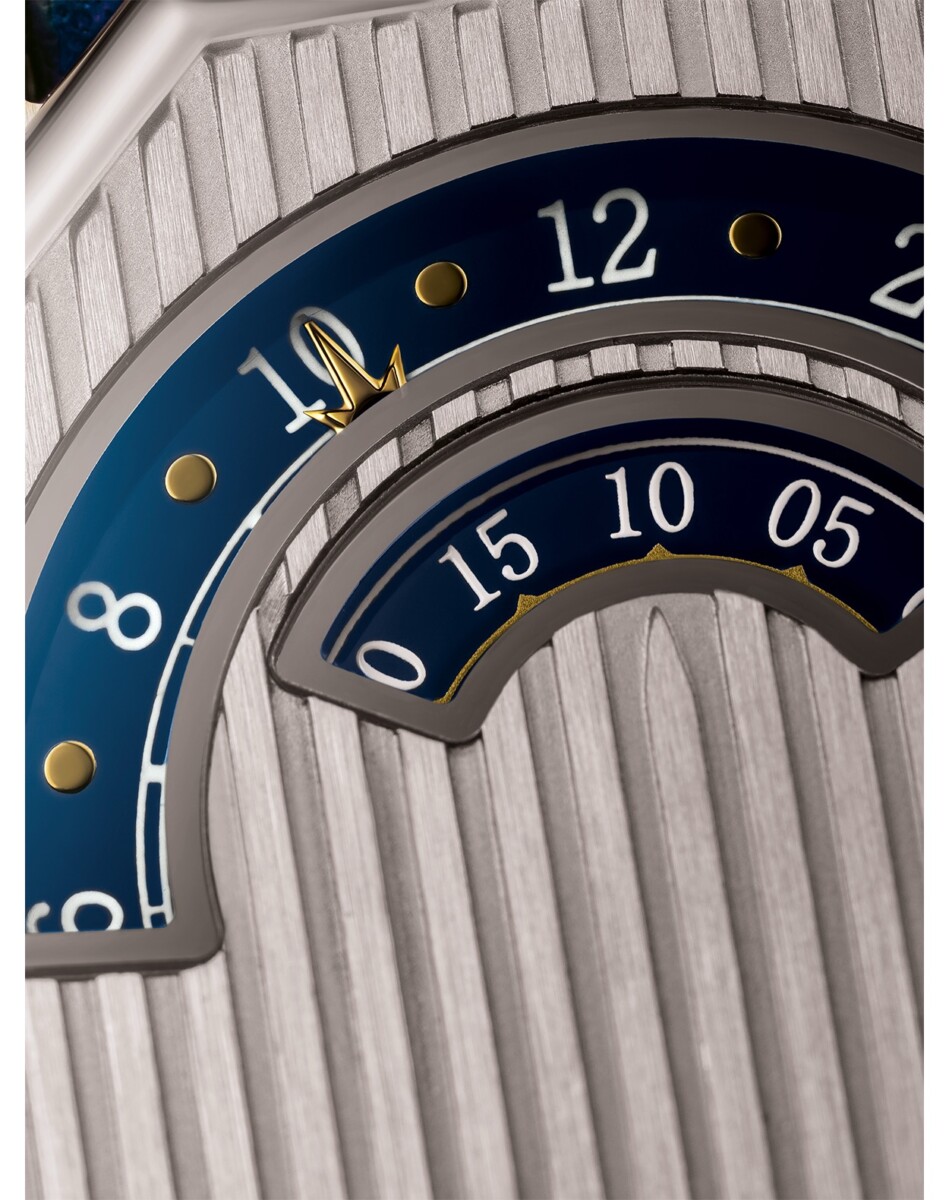
The lower aperture handles the minutes unconventionally. The disc moves, while a fixed arrow integrated into the dial serves as the reference point. This inversion, where the indicator remains static and the scale moves, is simple in principle but extremely sensitive in execution. Any play in the disc or inconsistency in alignment becomes immediately visible. Beda’a limits the display to five-minute increments, which is not a shortcut but a necessary constraint given the scale and the visual language of the watch. With apertures this reduced and a dial this closed, legibility depends on restraint.
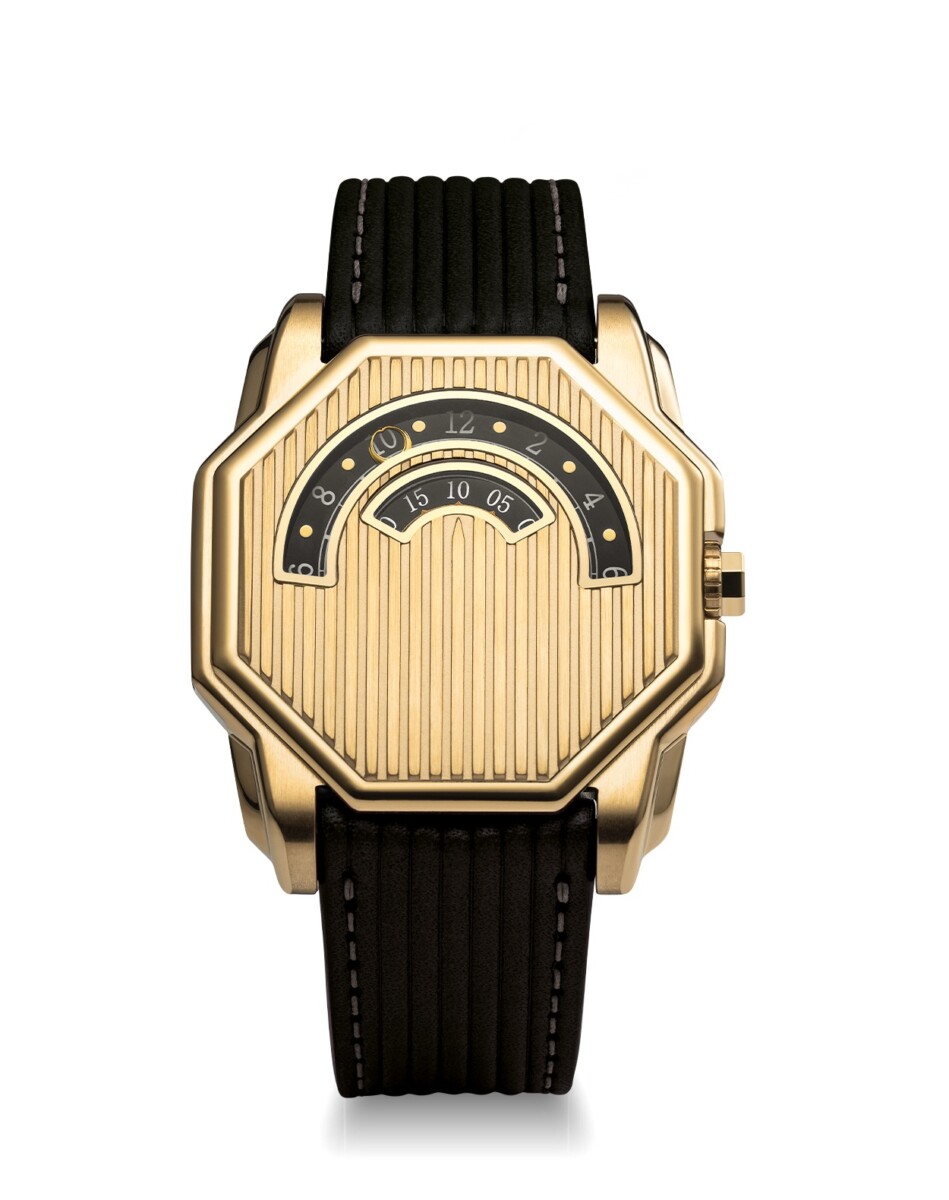
The dial itself plays a bigger role than it might initially seem. It’s not a flat surface but a closed structure that follows the geometry of the case. Without that relief, the watch would collapse visually. By introducing depth through form rather than additional elements, the watch maintains its profile while still offering a sense of structure.
Contextually, Beda’a occupies a very specific position. It’s part of a small but increasingly relevant group of Middle Eastern independent brands that are not just assembling watches, but building identifiable design languages. That distinction matters. For a long time, the region has been associated with consumption of high horology, not production. Brands like Beda’a are shifting that narrative, and they’re doing it through consistency rather than isolated releases.
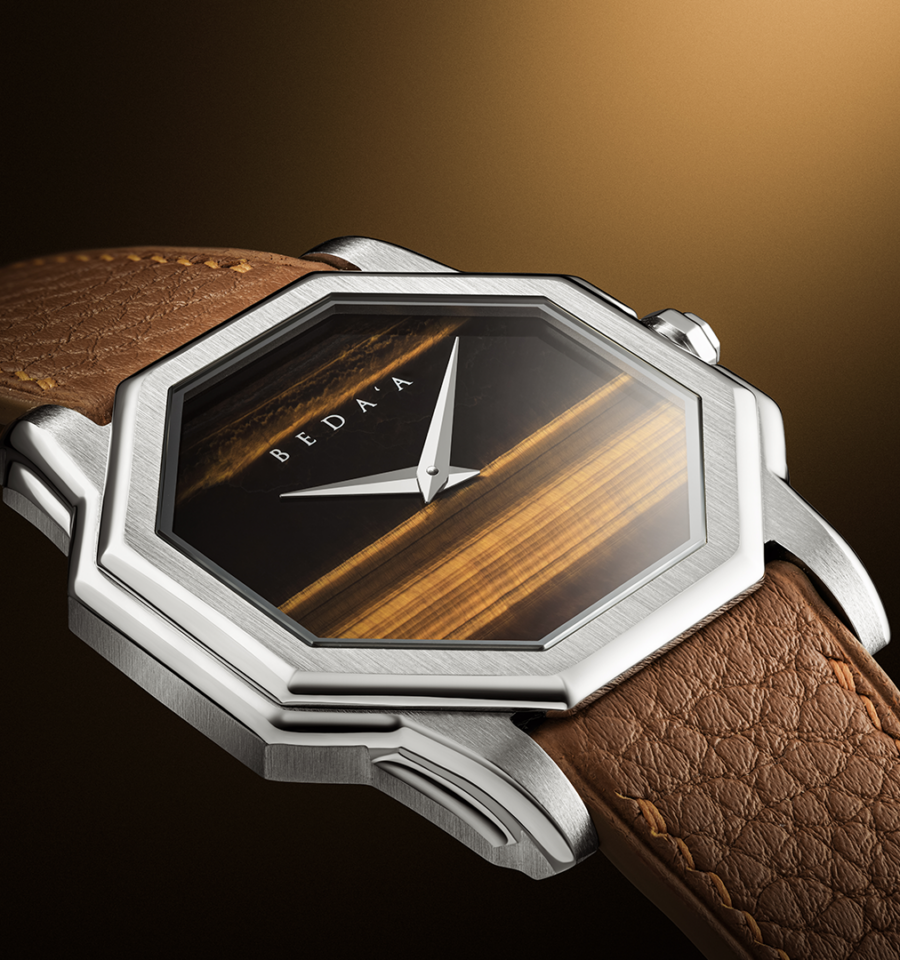
The Angles collection has already demonstrated that it resonates with collectors. Limited executions selling out within 24 hours is not just a marketing point, it’s an indication that the design language is understood and accepted. Introducing a complication into that framework is always a risk, because it can easily disrupt what made the original pieces work. Here, that balance is maintained.
Which naturally leads to the question of positioning, and inevitably, the GPHG. At around 1,800 CHF, the Angles Guichets sits in a segment that has historically been competitive, particularly in categories focused on time-only or light complications. What works in its favor is not mechanical complexity in the traditional sense, but clarity of concept. The watch has a defined objective and follows it through without unnecessary additions. That kind of coherence tends to resonate with juries when it’s executed properly.
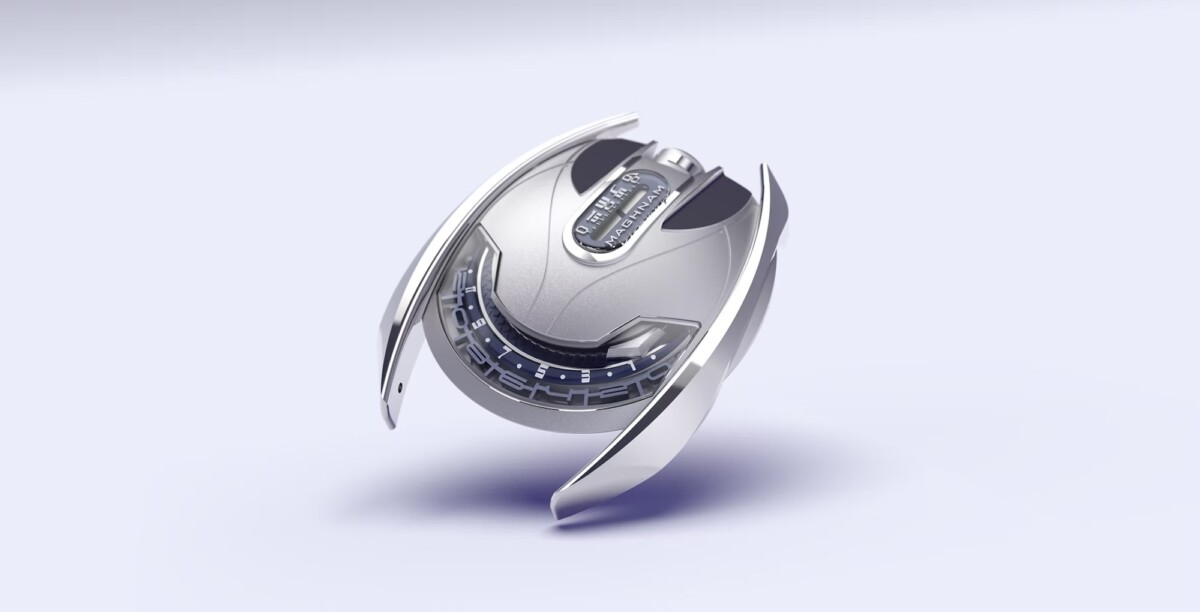
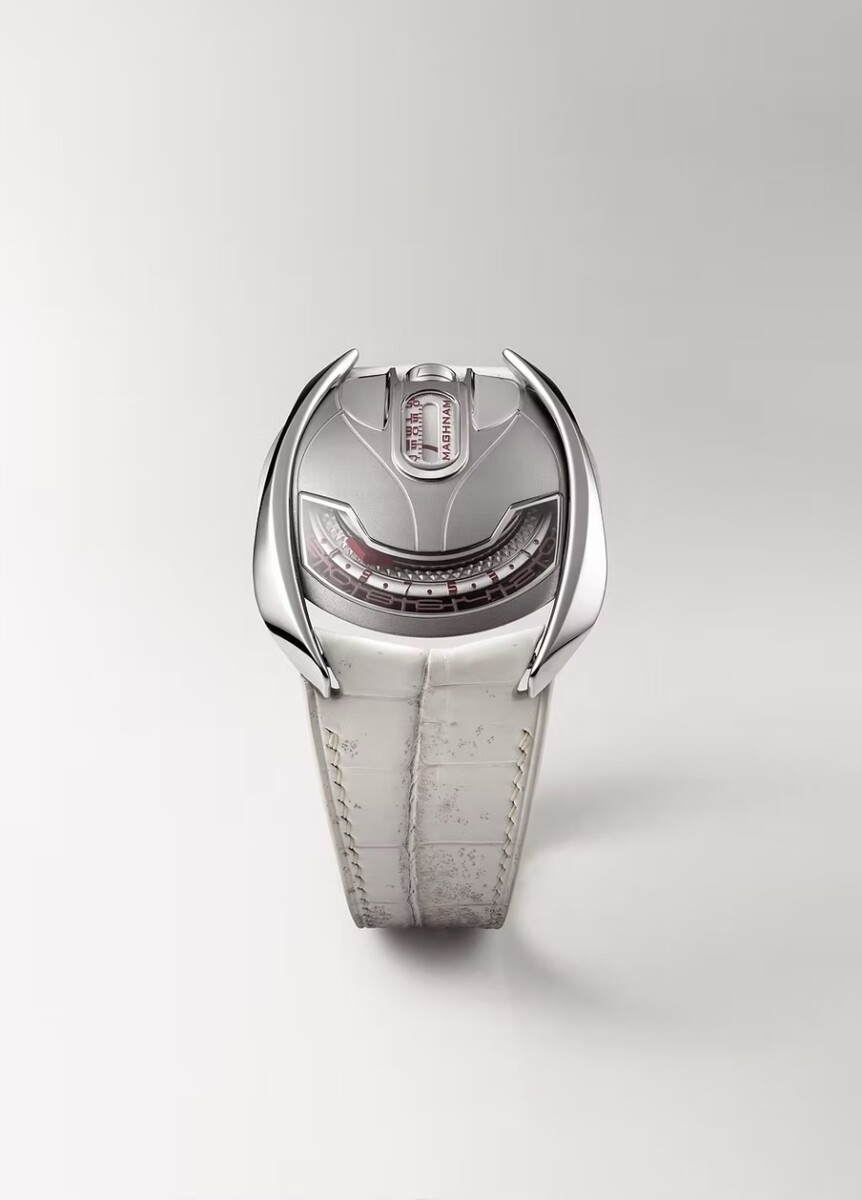
Sohaib Maghnam’s role in this shouldn’t be reduced to aesthetics. The constraints imposed by the Angles case, the modified 7001 architecture, and the demands of an aperture display mean that every decision is interconnected. If you look at his independent work, the same principles appear consistently: controlled geometry, careful use of space, and a refusal to rely on decorative shortcuts. Check out the new Moharib piece. Here, those principles are applied within the structure of a brand that already has its own identity, which is a more complex exercise than designing from scratch.
The Angles Guichets is clear and strong competitor in the indies scene. It operates in a more interesting space, where design discipline, mechanical adaptation, and price positioning intersect. At 1,800 CHF, you’re entering a range where comparisons become unavoidable, from Nomos complications to other entry-level independents. What Beda’a offers here is not finishing excess or mechanical spectacle, but a controlled integration of design and mechanics that is rarely this resolved at this level.
Beda’a has been on the magazine before, and it will stay there. Not out of familiarity, but because it’s one of the few young brands that is actually building something coherent over time. The Angles Guichets doesn’t try to redefine the aperture watch. It simply shows that Beda’a understands exactly what it’s doing, and more importantly, where it’s going.
Specs:
- Movement: modified Peseux 7001 for 24-hour day and night indication, hand wound.
- Dimensions: 34 x 37 x 6.3 mm (L x W x H)
- Case Material: 316L stainless steel with a matching buckle.
- Dial: lacquered, 24-hour cycle.
- Hands: Sun and Moon indicators, Day and Night, polished
- Water resistance: 3 ATM
- Sapphire crystal
- Strap: calfskin leather, embossed,stitched.
- Reference: BQAS0526-37
- Swiss Made
Visit bedaawatches.com to discover the new collection.

SUBSCRIBE NOW AND NEVER MISS A THING !