
As a second entry, chronologically in terms of stories being presented to the readers and as I visited the day after my initial visit to Phillips, Christie’s was always going to be an interesting one. We saw the depth of their catalogue – quite Patek-heavy as expected – while coming off the back of successful sales for all auction houses in Geneva, creating ripe conditions for compelling lots. I had been shown the catalogue a little ahead of time, and thanks to a close friend who works out of the NYC office I was able to have my mind set on seeing specific lots well in advance. Scrolling through the PDF file on the flight over, I made a vague mental list of lots I should absolutely handle, while understanding that I ought to remain curious by examining all of the display cases while in the room.
I knew that the John Shaw collection was one to look at, as my love for the Louis Cottier complications runs deep. My first experience with his work came at Sotheby’s in Geneva a year ago, in which their sale included a ref. 1415. Having been mistakenly presented with a 1st series ref. 2499 – somehow they shared lot numbers – my short time with a watch which has compelled the aesthetic and mechanical curiosities within me left an indelible impression on my understanding of Patek, much like their enamel signatures from that reference’s period. Christie’s sale included not just one, but two Cottier movements, cased in two different sizes; one being another example of a ref. 1415, but also to my excitement one of the two (or three, or “few”, depending on the source it seems) known ref. 542HU’s. Set within a tiny 28 millimetre yellow gold case, I knew it was one I absolutely had to handle, despite knowing it was far from a pristine example.
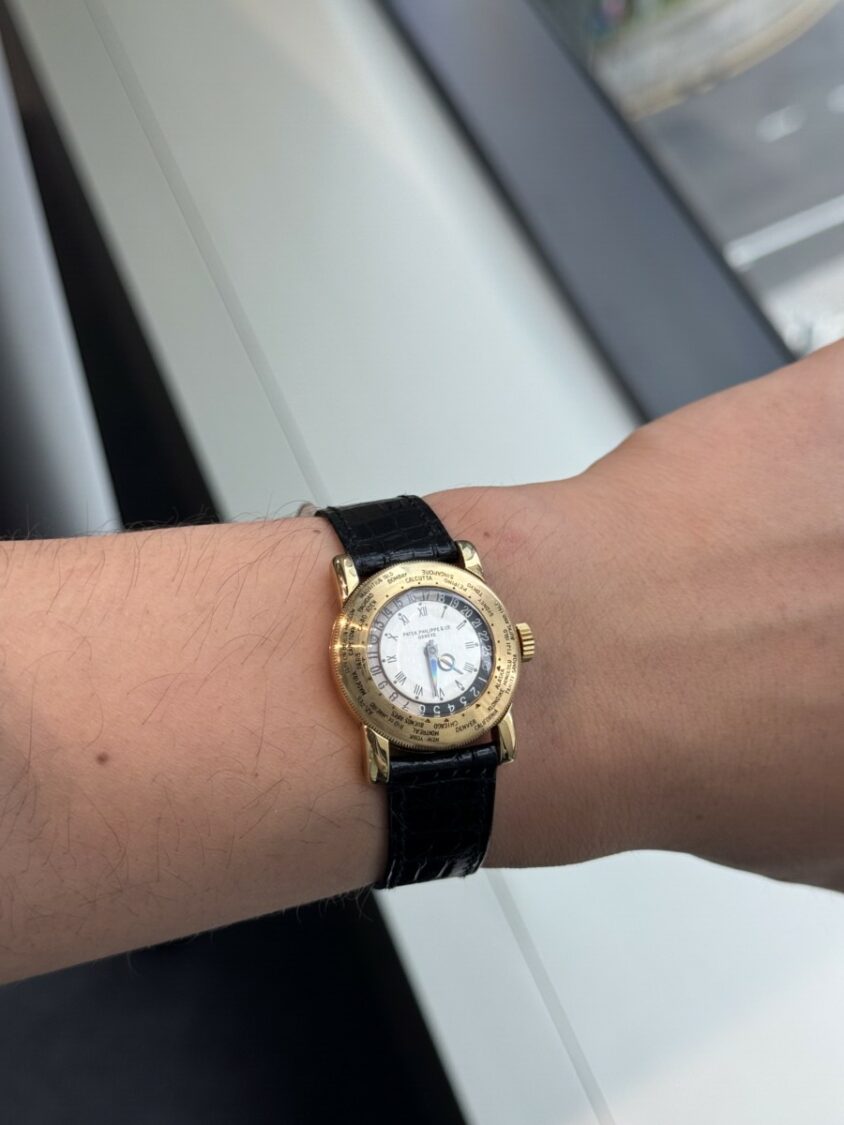
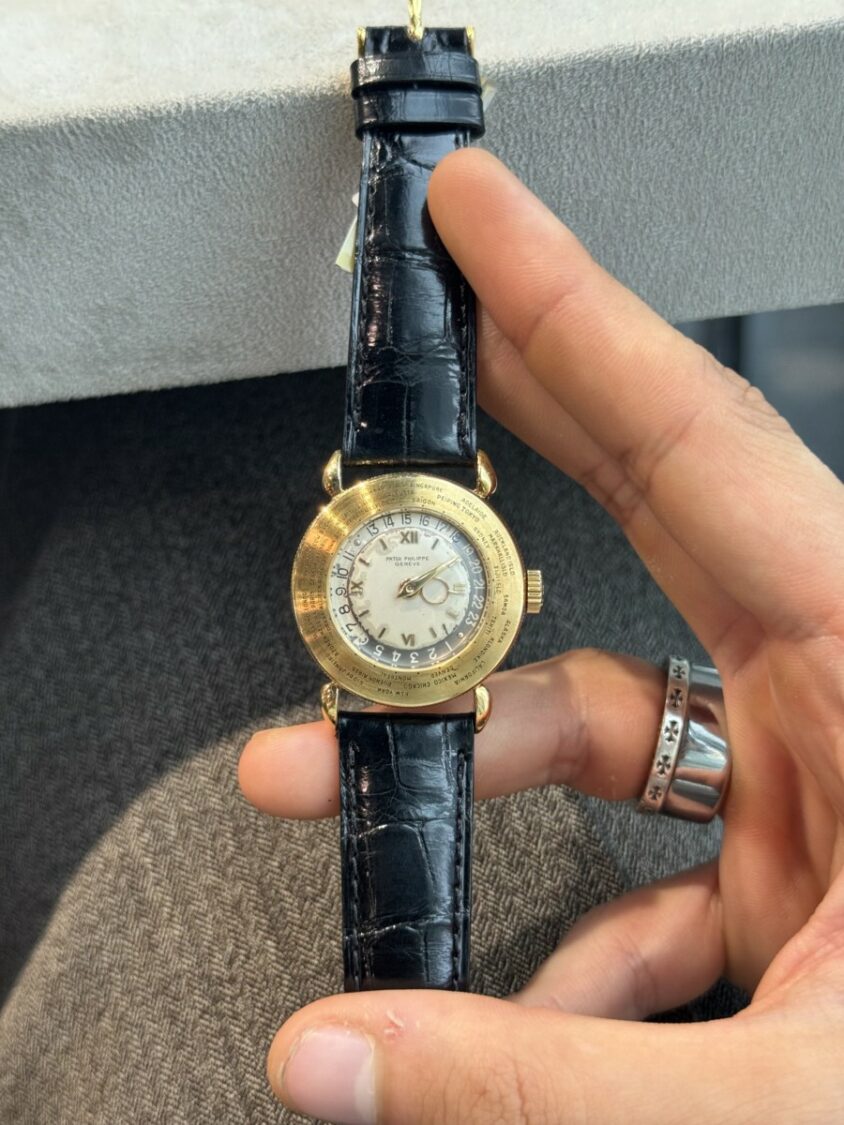
A side by side comparison of the 542HU and 1415: what stands out are the differing lug designs and hour hands
After a brief walk over from Admiralty MTR station, through crowded malls and elevated footpaths, I eventually found my way to the lobby. Quite imposing in its scale, it differs drastically from the more cramped and traditional confines of the Geneva preview spaces. Unhindered by the restrictions of hotel venues, Christie’s went positively bananas in their choice of space. The high ceilings guide one’s view through undulating sconces (of sorts?), while soft edges create a very sterile and serene atmosphere. A giant red Jeff Koons sculpture anchors the space, almost blocking the view down towards Central, which remains rather unappealing to my eyes but who am I to judge how to fill such a cavernous space…
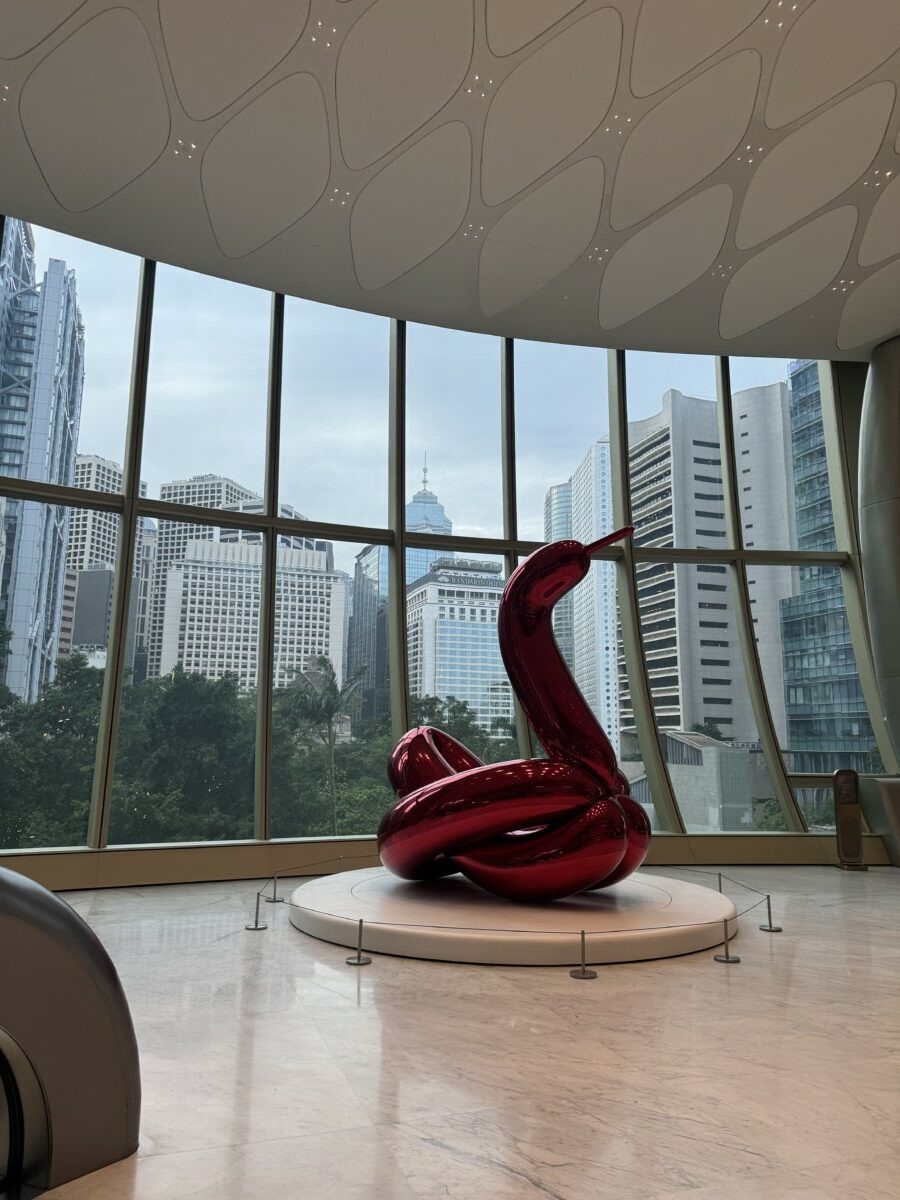
Not much more to say if I’m honest.
Now for the meat and potatoes of the visit, a trip up to the seventh floor to the preview space! I am welcomed by… apathy. Rather surprised by the cold shoulder, I walk up to the display cases to have a look at the lots. While I did have an initial list, I allowed myself to remain curious to let other watches catch my eye. The space wraps around the corner, with private viewing spaces occupying the centre. It’s quite linear, compared to some of the more square spaces of Sotheby’s in Geneva or Phillips in New York, so there was a mild sense of intrigue and adventure to turning left. While the Christie’s employees remained polite and attentive towards my trays, the specialists showed a distinct lack of interest in me. Despite having the entire preview space to myself for around half an hour, I was not greeted or given eye contact until I had to ask an employee about winding a watch. While I understand that auction houses aren’t the best environment for fostering community, a point I discussed with a friend who works out of their New York office, I still felt a little hard done by with such an attitude of disinterest. It contrasted heavily with my Phillips experience, where I was greeted warmly and given the time of day when I was around. To be honest, that made me want to return to their auctions, while with Christie’s I merely went as I had to meet people who happened to be bidding. First impressions matter, and I have never demanded undivided attention from specialists at any auction house, and it shows in the fact I didn’t exchange contacts with any of their specialists.
But enough about the space and people while lightening the mood, time to take a seat at their suede-lined tables and let’s get into some trays!
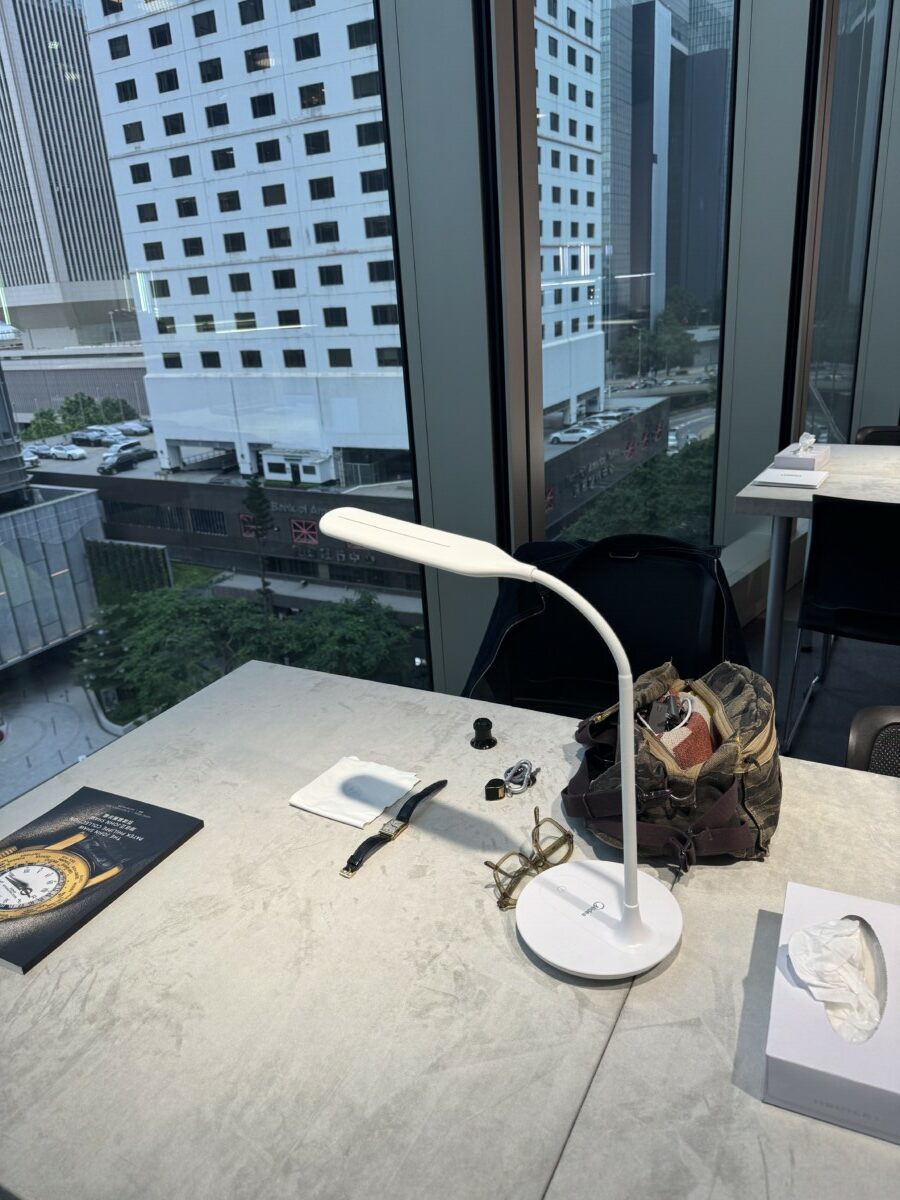
Under the (annoyingly) bright spotlights.
What appeared before me were some of the greatest Pateks that I’ve ever had the pleasure of seeing. Now, we have to remember that I’ve only been in the auction world for the last year so I don’t have any of the fantastical stories of years prior like others in the room, however I think I know an important watch when I see one! I settled upon three trays with an average of five lots per tray, and I took full advantage of having the preview room to myself in order to spend as much time with these watches as I could. The cover lots from within vintage Patek were true “money-no-object” pieces of brilliance, with my personal highlights being the ref. 1595 with a stunning cloissonné dial (Lot 2436) and a ref. 2524/1J minute repeating wristwatch (Lot 2240). Both watches seem very apt to highlight as some of the finest examples to demonstrate the brand’s savoir-faire at an aesthetic and technical level, but out of the lack of good pictures I’ve decided to focus on the latter.
For the 2524, most people would argue that Patek remains the standard for minute repeater complications; their tone and cadence are incredibly clear and precise, with them continuously fine-tuning the movements over many decades. Additionally, purists will raise the point that yellow gold is the best metal for such a complication, as it allows for the clearest resonance when chiming. Having handled minute repeaters in multiple metals, I am inclined to concur with them, as platinum and other tones of gold gave off a distinctly different tone (after a couple of goes and some very intense listening!). I also found its presentation within the reference to be rather elegant, letting the movement do the proverbial talking. Two dauphine hands glide over a silvered dial, with raised gold indices and an enamel signature highlighting the watch as the quintessential “Calatrava” design. The condition of the watch is stunning, with strong lugs, a clean dial with untouched enamel, all with its original buckle. Being one of the less than 50 known examples across all reference variations, such a strong example accompanied by its extract proved to be of great appeal to numerous bidders, fetching an all-in price of 3,302,000 HKD on the 26th of November.
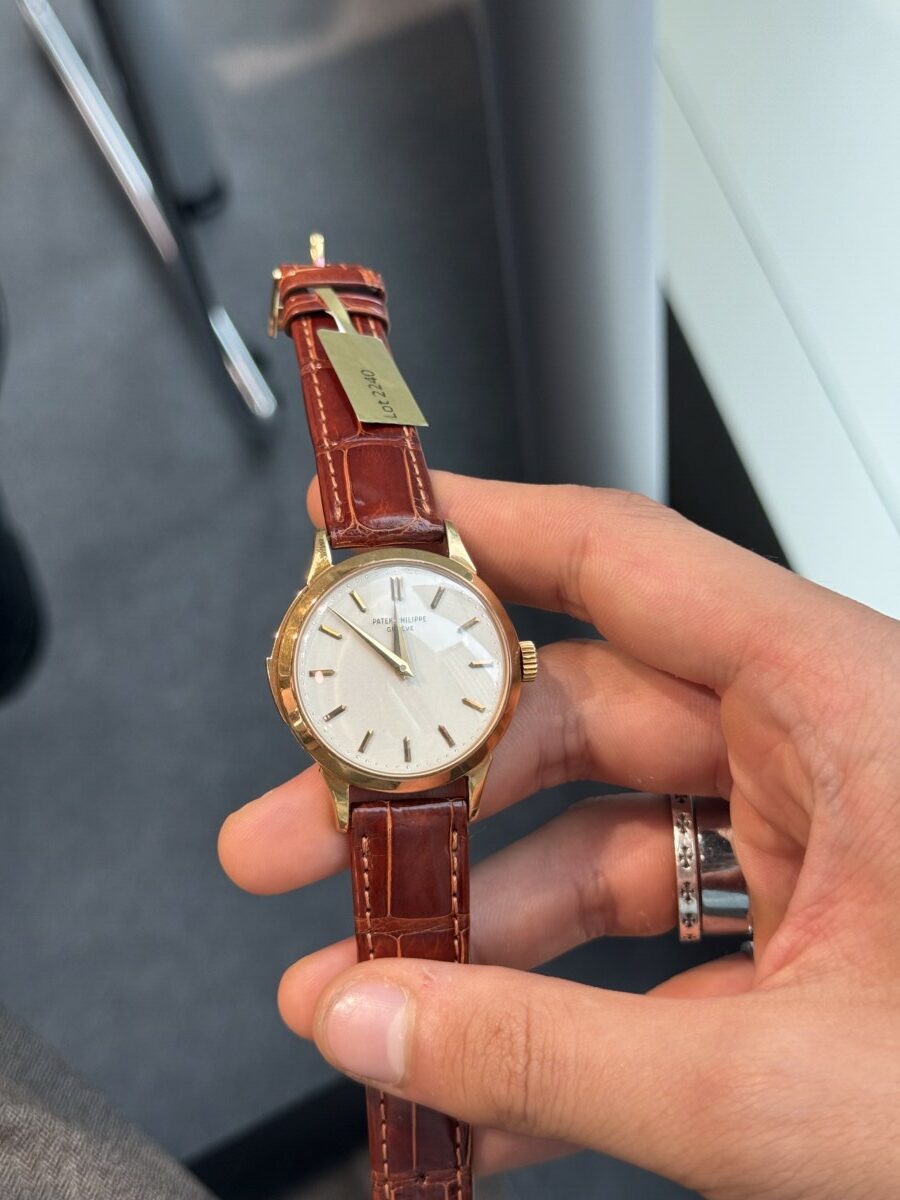
Won’t be seeing another one of these again for a very long time…
On the other hand, I’ve chosen to include – much like my rundown on Phillips – a pocket watch! It remains quite clear that I have a penchant for their style and presence, as they stand out in size amongst their peers in the display cases. Within my hands rests a lovely ref. 600 pocket watch, sold by Parisian retailer Guillermin & Cie in 1936. Its three-tone dial stood out to me, as I have a soft spot for a mirror track… What I found most interesting in regards to the dial, is that the original sales invoice details how the pocket watch initially came with a different dial, but was subsequently changed by Guillermin “selon votre désir”, while also mentioning that it could be returned to its original specification in the eventuality that the owner did not like it.
While the case condition remained quite strong, with visible hallmarks on the bow and a deep personalised engraving on the caseback – I’m unclear on whether it was done by Patek themselves, the extract isn’t visible on Christie’s website – it had some very clear signs of wash and wear. The all-important “accent grave” over “Genève” is missing, along with some substantial discoloration around the 12 o’clock numerals and the subsidiary seconds. The catalogue also fails to show that there is a screw missing in one of the bow latching points, which is not hard feat to overcome – my watchmaker has redone screws for some of my pocket watches – but clearly detracts from its overall appeal, that vague sense of “project” to some. Overall, the condition did not match the very strong estimate of 140,000 – 280,000 HKD, with the lot closing as unsold.
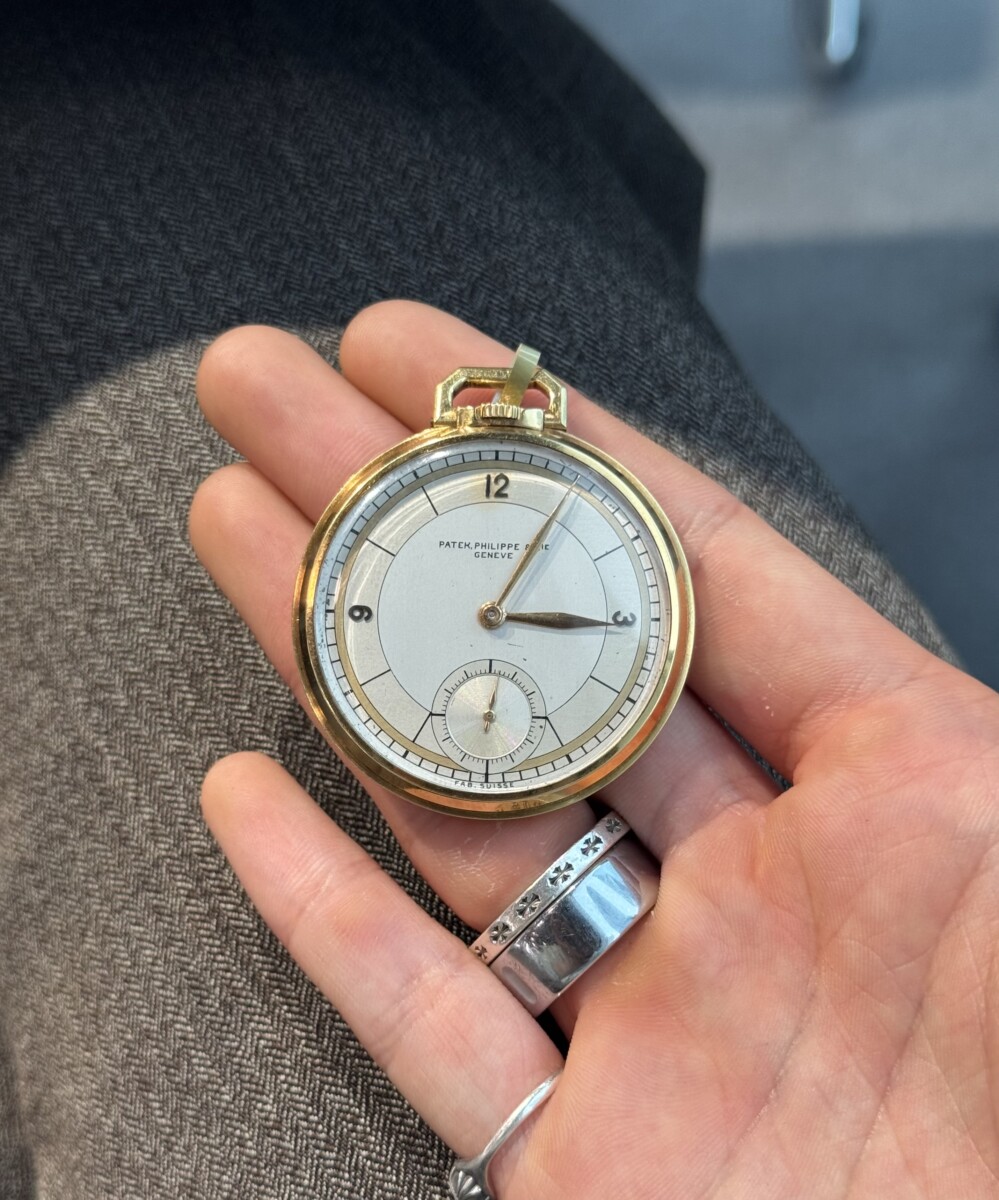
Not perfect, but charming nonetheless.
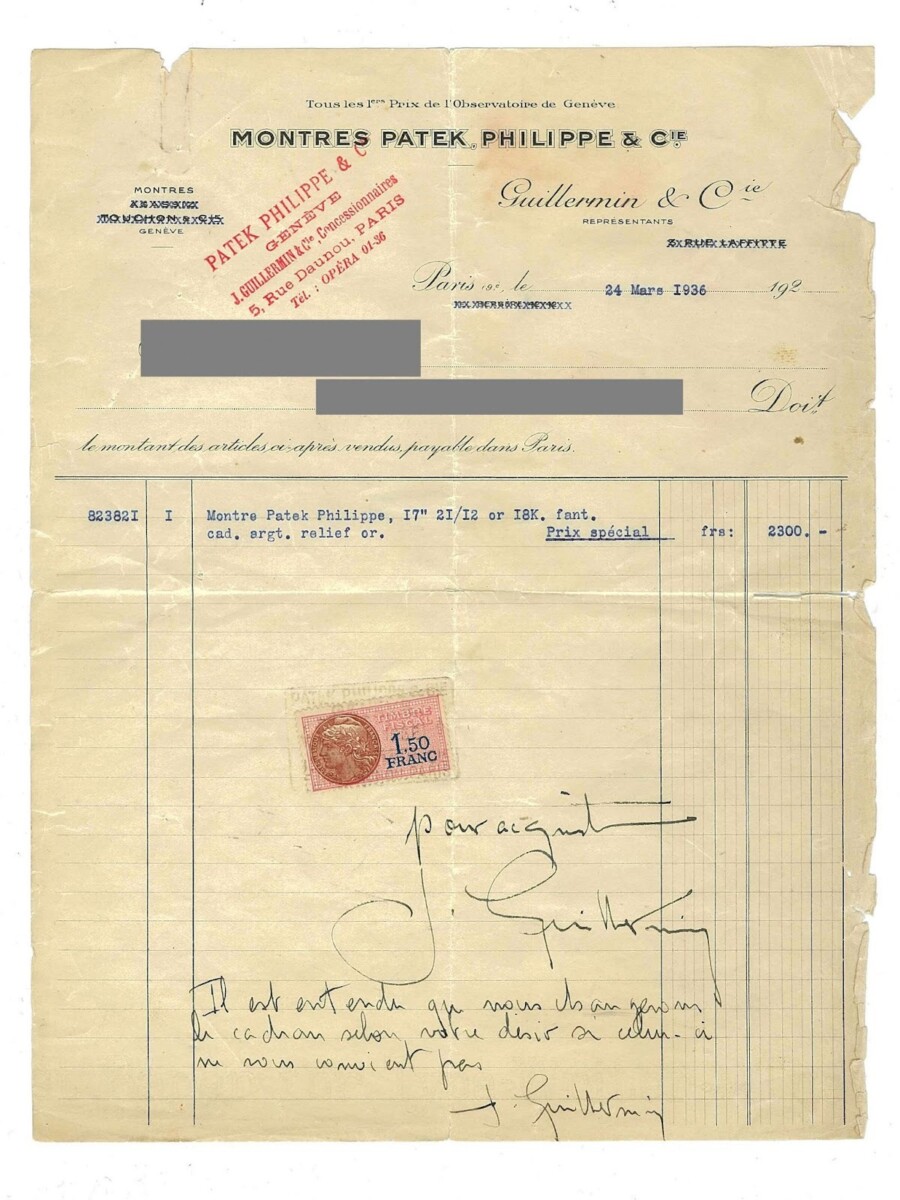
Interesting documentation: the ability to change dials back in case the original client didn’t like it!
Photo credit: Christie’s Hong Kong
As I was not putting any serious bids down, I felt rather reluctant to step into the bidding room apart for some brief observation. Much like any auction, the room itself remained rather quiet, with maybe 15% occupancy at best. The chairs were mainly taken by Asian bidders, with the odd remaining European one for some of the important vintage lots. The main point of note that I have from both auctions was the distinct lack of Americans in the room, mostly due to tariffs but also because the preference for buying – and subsequent networking around the events – tends to be better in Geneva or Monaco. The two banks of telephone bidders were consistently active, leading to yet another white glove sale this season on their first day, along with a wide global pool popping up on the screen for those manning the rostrum. Moving through their lots with relative ease and efficiency was my main takeaway, with polite persuasion by specialists and the auctioneer fuelling the bids.
Overall, I realise I don’t have terribly much to add on to it; it felt like any other prestigious auction experience, especially as I was mostly alone save for one day when I went with an Italian dealer. His reputation precedes him, which became abundantly clear as staff rushed to get him a catalogue. It was mildly amusing, but I had also realised that auction fatigue had properly settled in. I was very happy to have seen their impressive selection, but I was more eager to get to my appointments with friends later that day. The bright lights and relatively intense atmosphere felt very claustrophobic, and I think I was tired from the facade we all put up in such professional spaces.
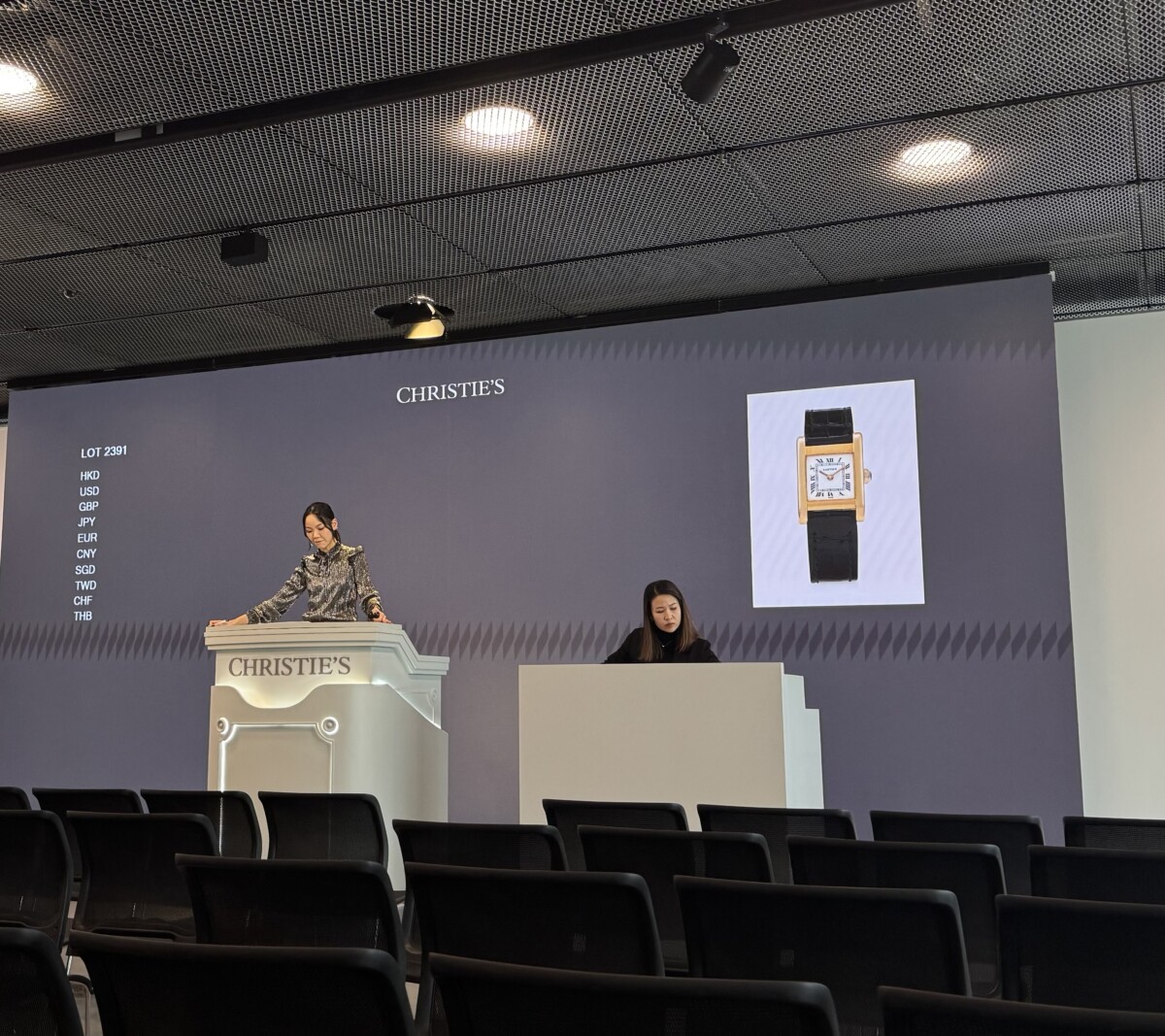
An unobstructed view of the stage!
My conclusion from it is that auctions are a fantastic place to see and handle watches, however the environment itself is not always the most welcoming. This was the hallmark of my experience at Christie’s, while also understanding that the business of auctioneering comes before its ability to nurture community. After some reflection, I’m not frustrated by it, instead I’ve come to understand the back end of this world. With such high expectations from clients – and the house’s reputation being put on a very public line – it makes sense to have priorities organised as such. I’m very fortunate to be able to take my time and choose exactly what I’m looking to achieve, so I’m allowed to let emotions lead. The passion which I see in those who work in the space remains palpable, but does take work in itself as a potential client to bring out of them and I feel guilty for taking time out of their point of focus. At the end of the day, I cannot dwell on it too long: I’m not a frequent participant, and I am still an unknown entity to most, so why rush the relationship or lie my way into one which won’t necessarily lead somewhere? I’ve got a great network of dealers who I buy and frequently seek advice from, and that fulfils my requirements for the foreseeable future. I remain excited for the next season that I’ll get to attend in person, with new people to meet and previously unknown watches to me peering through their display cases. I got to spend a lot of time with someone I now consider a good friend and an incredible mentor, so focusing on that for next time will arguably bring me as much joy as it does to handle such desirable watches!
Until next season!
Em –
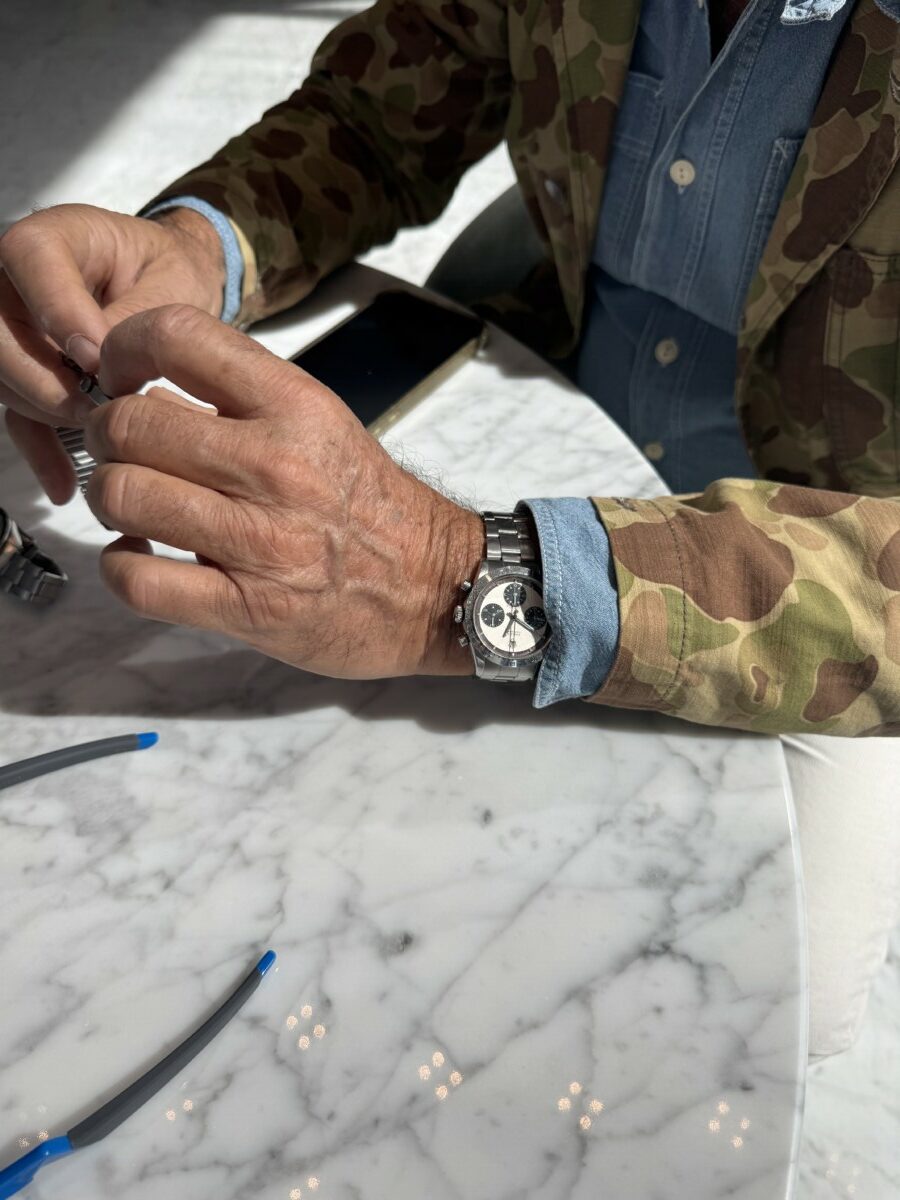
Over a coffee at the Arabica in the Henderson’s lobby, a timeless classic sits under my friend’s cuff.

Em
SUBSCRIBE NOW AND NEVER MISS A THING !