
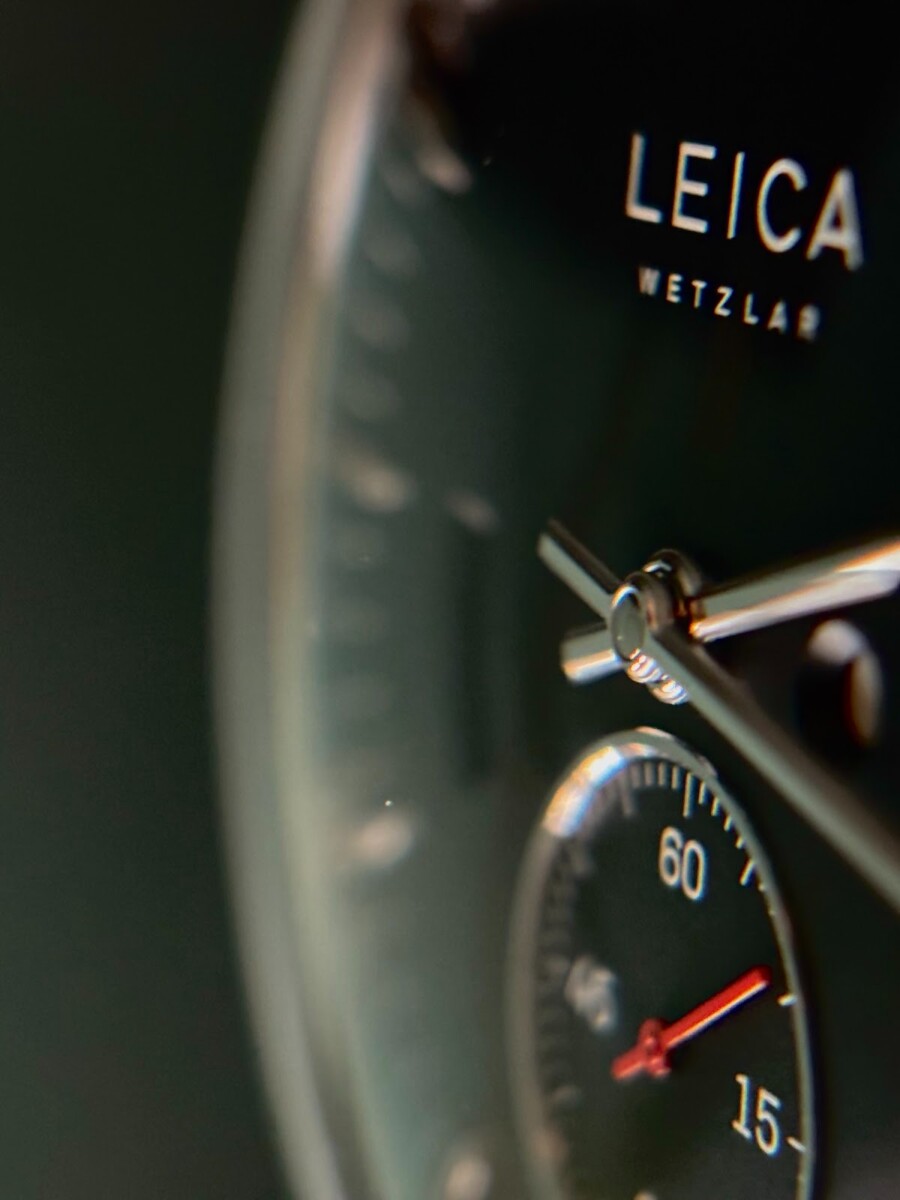
German style – the Leica ZM1
Other countries have their own style capitals, such as London, Paris, or Milan. In Berlin’s capital city restaurants, on the other hand, Wiener schnitzel is served, couture has long since disappeared, and although Germany still produces many cars, they no longer look german, but have to appeal to other markets.
German style is not visible. But it exists. You just have to look for it elsewhere, not in the metropoles. A secret centre of German style is Wetzlar, about an hour’s drive from Frankfurt. That’s where Leica is based. The company invented the modern camera over 100 years ago, but above all, it still has a unique position among photographers all over the world. Not only because it can be used to take excellent photos. Perhaps more importantly, a Leica is special, and you can feel it: it is the click of the shutter; it is the tactility of the magnesium body.
German style does not originate in a design studio with a brushstroke, but rather in the developer’s engagement with his subject. It is not the form that is beautiful, but the holistic concept. And then the beauty of the form becomes apparent when you use it. German style cannot be seen, but it can be felt intuitively.
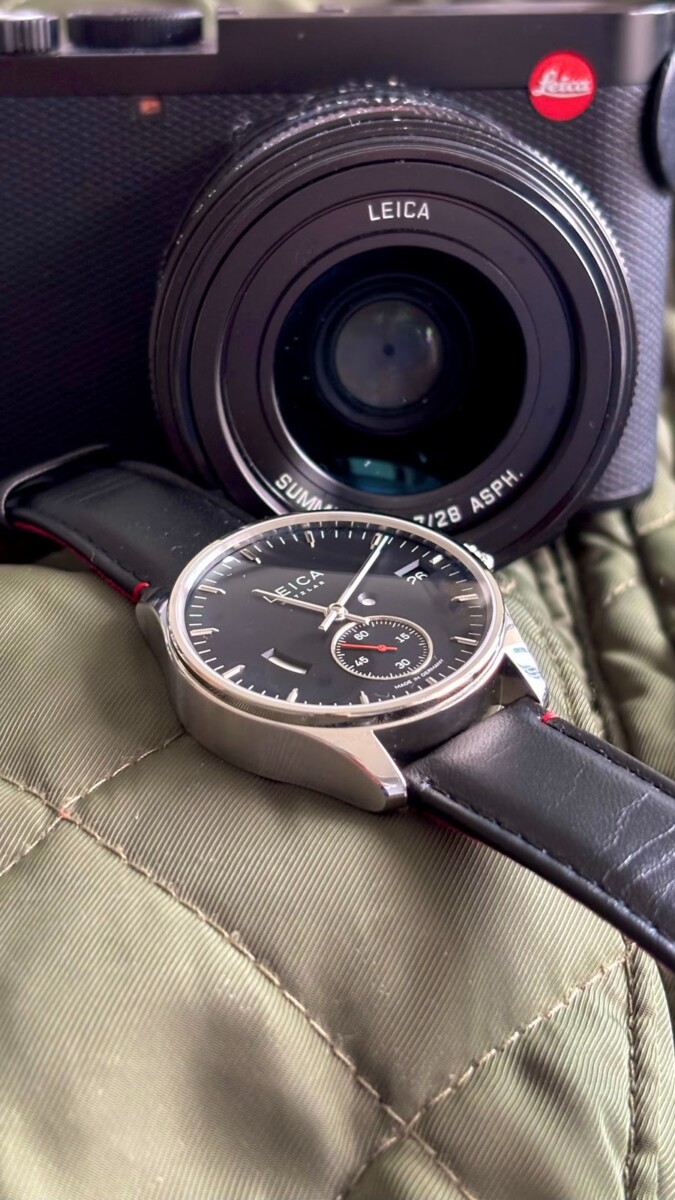
Leica cameras have become famous for this. And now watches are following suit. This is logical when you think about German style. Both genres, cameras and watches, are part of the same family because both actually depict time. Every photo shows a moment in time, just like the secondhand passing over an index. Behind these representations of time are highly precise, complicated mechanisms consisting of wheels and gears, springs and bridges in a compact space.
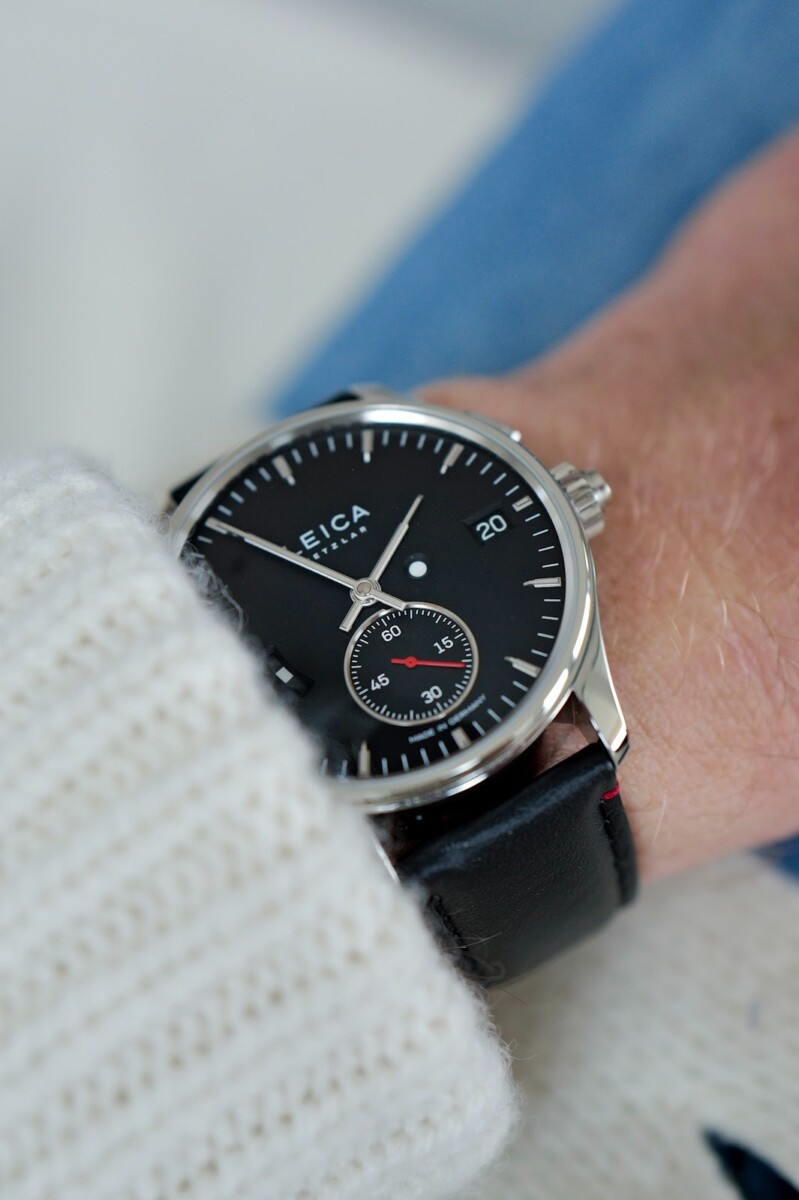
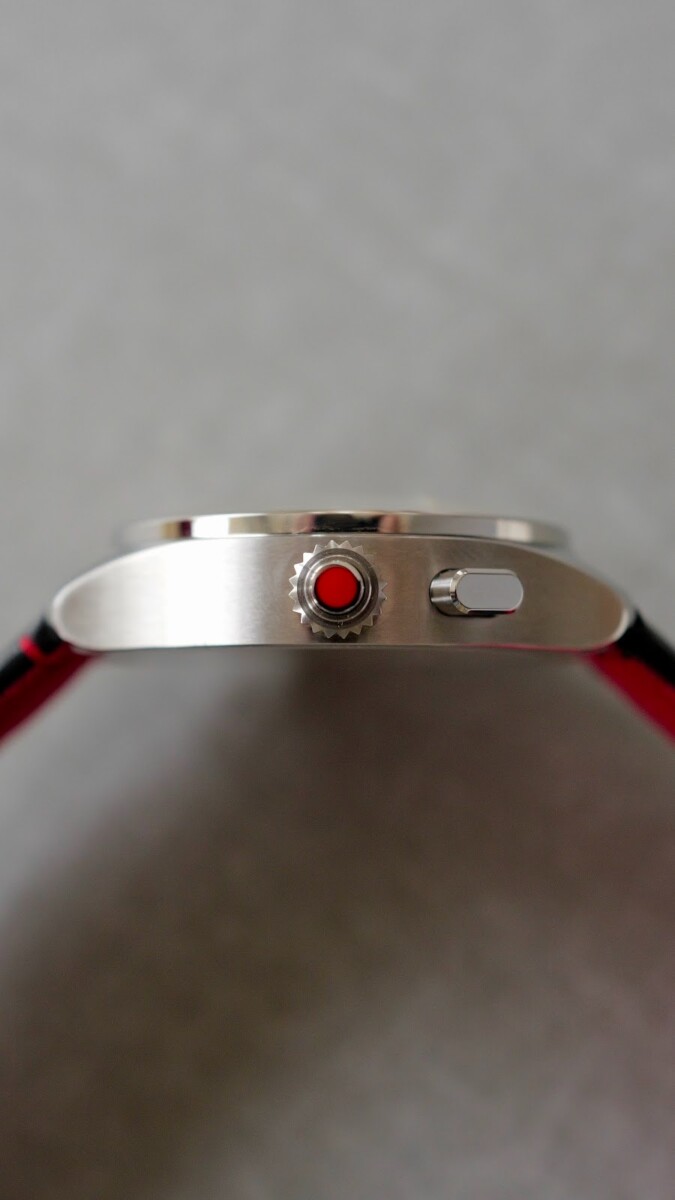
The watch was designed by Prof. Achim Heine, an experienced designer at Leica, as an evolutionary product derived from cameras. Instead of a normal crown, the“Zeitmesser 1” has a kind of shutter release, highlighted in Leica red, of course. A satisfying click of a button orchestrates the inside of the watch in a fraction of a second: it stops the movement, immediately resets the second hand to zero, and marks this with a red dot in the status display. Pressing the button again instantly starts the watch and causes the status display to jump to white.
When pressing the button, the owner feels his intervention in time, the precision of all parts. This also applies to the date, which is set using a separate button with equally high tactile quality. The concept is based on many years of development and patents. Reinhard Meis, former chief developer at Lange & Söhne, and AHCI member Andreas Strehler were involved in its creation.
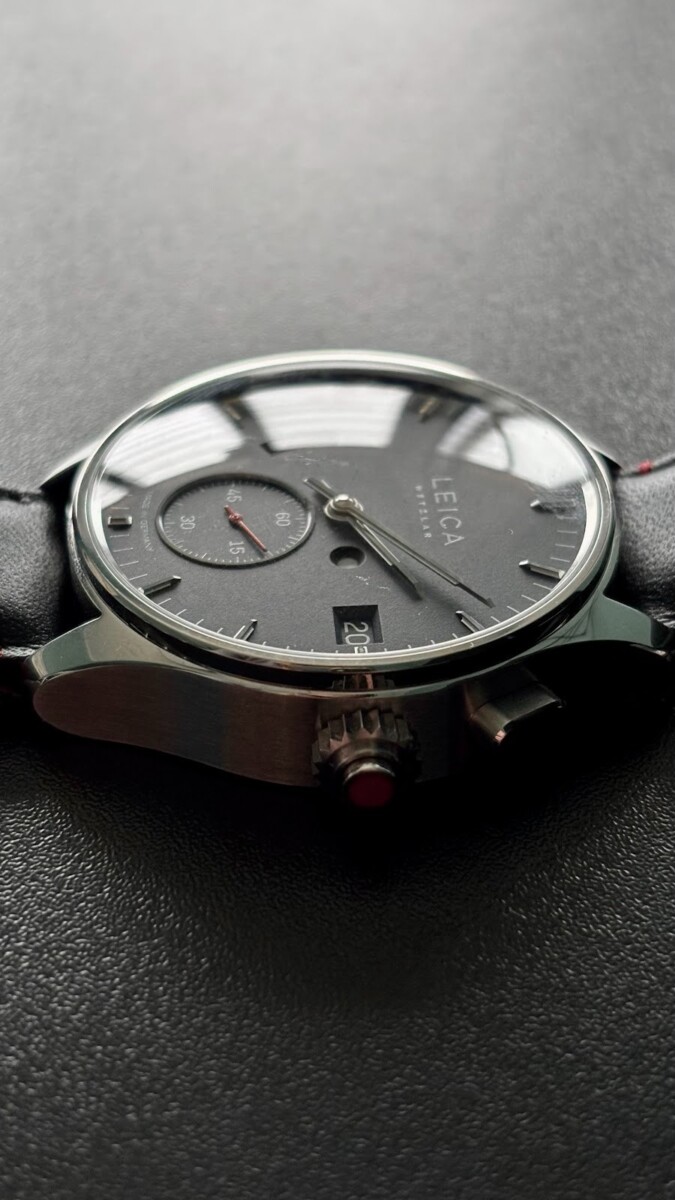
The other components are also derived from cameras: the solid dial is grained like a camera body, the power Reserve indicator resembles a camera shutter, and the sapphire crystal is strongly domed like a camera lens. The ergonomic profile of the case fits comfortably on the wrist, mirroring the shape of a camera that fits ergonomically in the hand. The finish of the movement relies on the same refinements that have proven themselves in cameras for decades.
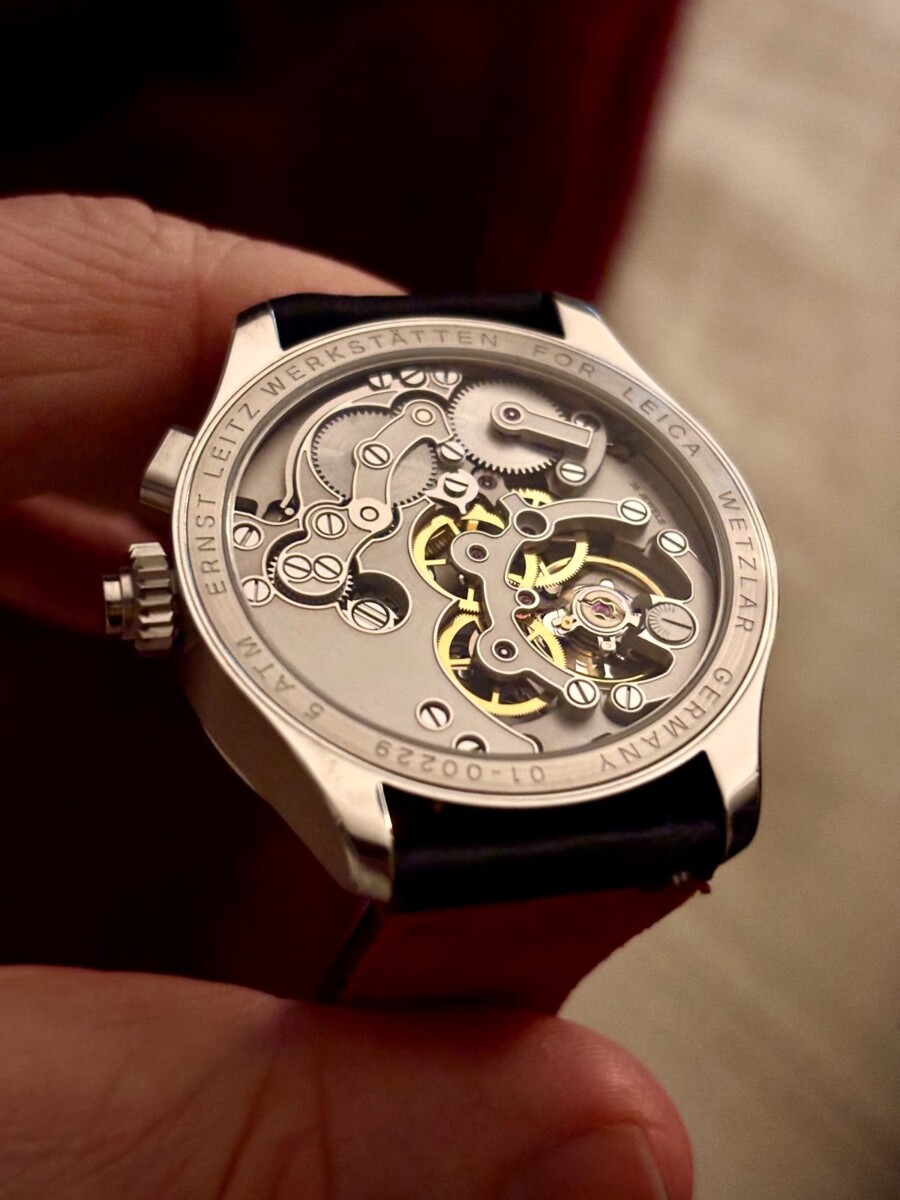
The parts of the movement are manufactured and assembled, along with the case and dial, by a hidden champion in theBlack Forest, about an hour and a half’s drive from Stuttgart, at Lehmann Präzision GmbH. The name says ist all. Everything, absolutely everything except the watch glass and the leather strap is made in Germany. With so much consistency, the only surprise in the end is the price. The ZM1 costs around 10,000 euros. That is extremely fair for the concept and craftsmanship—and for the exclusivity: only 300 to 600 watches are produced annually for customers who have discovered German style yet.
Because you can see German style after all — once you grasp it. Look for the red dot. And then press it.

Dr. Knud Andresen
SUBSCRIBE NOW AND NEVER MISS A THING !