

I don’t usually write about jewelry watches. Not because I dislike them, but because most of them don’t survive five minutes of serious horological scrutiny. They tend to sit in a comfortable but weird zone where “craftsmanship” is mentioned more than it is demonstrated, and where decoration is applied rather than integrated.
Simon Brette is one of the very few contemporary watchmakers who forced me to reconsider that position.
What initially caught my attention with Brette was not the visual impact of his Chronomètre Artisans watches, but the intellectual structure behind them. There is a clarity of intent and purpose that immediately separates his work from the current wave of independent “expressive” watchmaking: Nothing feels decorative for the sake of seduction.

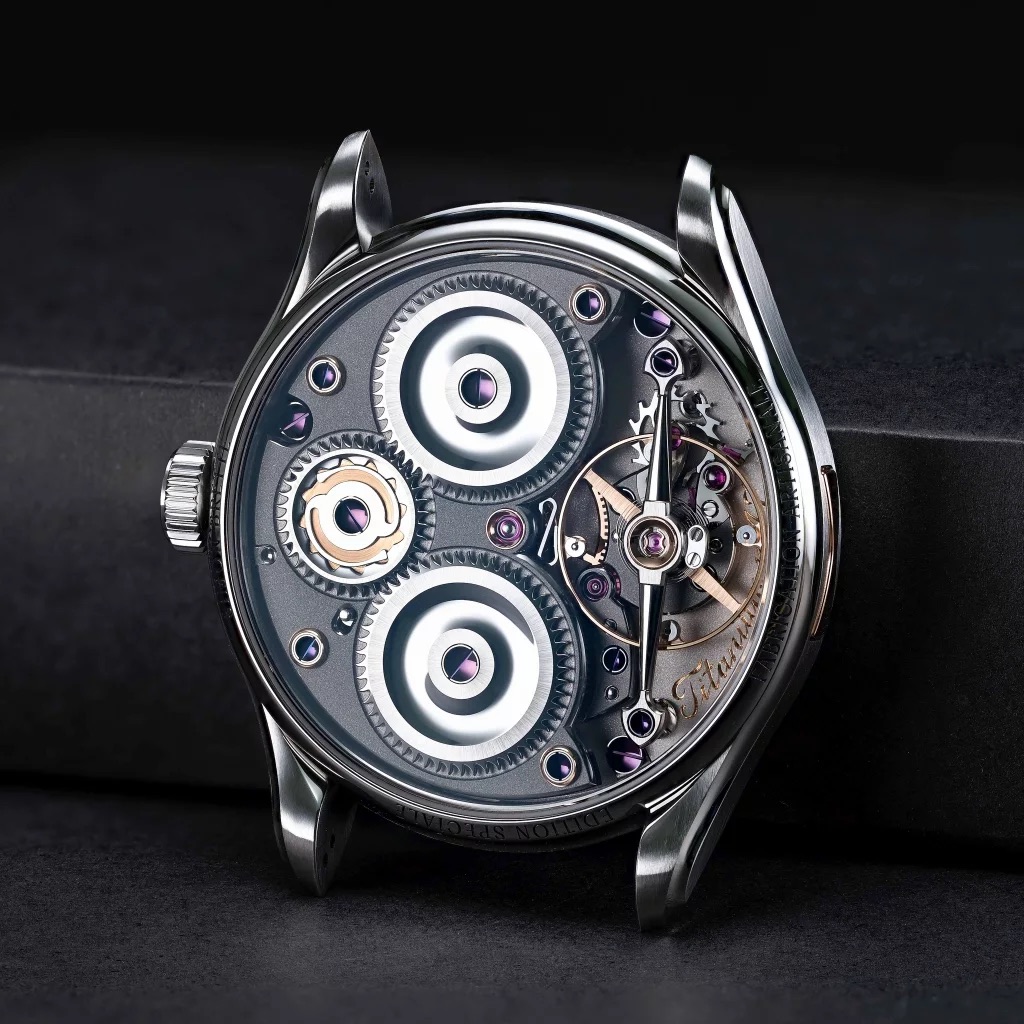
Simon Brette comes from a serious horological background. Restoration, movement construction, high-end independent environments, and a long exposure to traditional chronometry. This matters because it explains why his watches are built from the inside out. The Chronomètre Artisans project is not a design exercise wrapped around a movement. It is a mechanical project that intentionally invites other crafts to intervene without compromising its core. That’s my architecture background speaking, by the way.

At its foundation, the Chronomètre Artisans movement is a manually wound calibre designed with classical chronometric principles in mind. Large balance, stable frequency, clear gear train architecture…. The finishing is deliberate and controlled. Anglage is present but not exaggerated. Black polishing is used generously.
What makes Brette’s Joaillerie pieces particularly interesting is that they do not treat decoration as an external layer. Engraving, gem-setting, and surface treatment are conceived alongside the case and movement, not added afterward. This is a crucial distinction. Too often, jewelry watches feel like a finished watch that someone decided to embellish. Here, the decorative crafts actively shape the object.

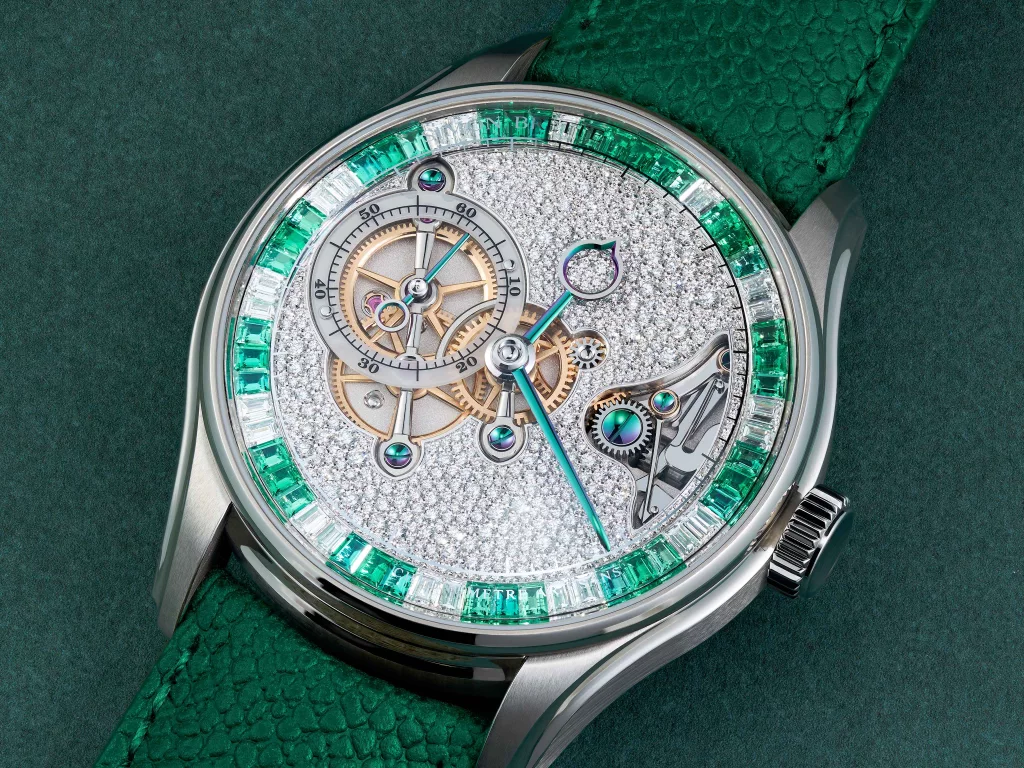
Each Joaillerie piece is unique, not as a marketing statement, but because repetition would contradict the process itself. Engraving patterns are drawn specifically for each case. Stone selection responds to those engravings. The setting techniques adapt to the geometry and thickness of the metal. There is no modularity. There is no scalability. This is slow, expensive, and fundamentally incompatible with volume-driven logic.
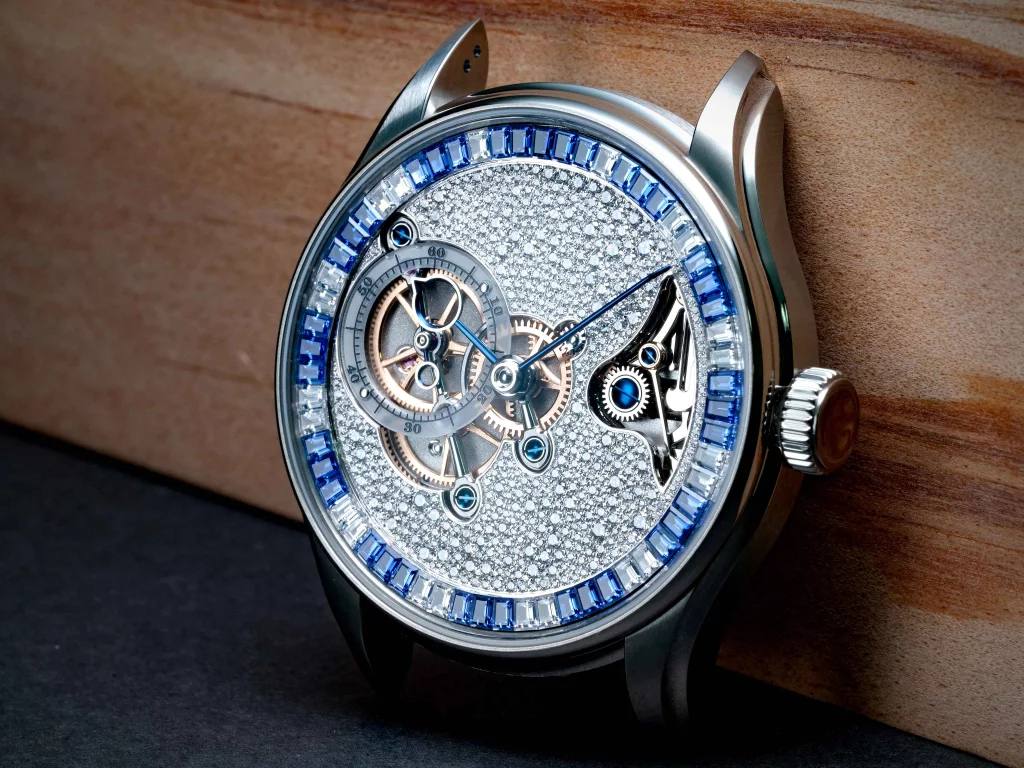

What impressed me most is Brette’s restraint. These watches could easily have fallen into excess. They didn’t. And we know about many who did. The gem-setting is precise and disciplined. Stones are chosen for color harmony and structural rhythm; the engravings are deep, architectural, and purposeful. There is no narrative overload, no symbolic storytelling forced onto the object. The watch is allowed to stand on its construction.
This approach places Brette in a very specific position within contemporary independent watchmaking. He is not trying to reinvent horology. He is not chasing disruption. He is quietly re-establishing a hierarchy of priorities where mechanics come first, crafts serve structure, and aesthetics emerge as a consequence rather than a goal.
Culturally, this matters. We live in a period when independent watchmaking is often evaluated by its visibility and shock value. Brette’s work resists that logic. His watches are an acquired taste. They require observation rather than instant reaction.
This is also why writing about his Joaillerie pieces felt relevant within the framework of my new art magazine, Ariste. Ariste exists to explore objects that don’t fit neatly into predefined categories. Brette’s watches belong exactly there. They are not purely horological objects, nor are they jewelry in the conventional sense. They are constructed works, born from technical discipline and aesthetic restraint.
Simon Brette represents a form of independence that is often overlooked: one rooted in method rather than attitude. His Chronomètre Artisans Joaillerie pieces are not statements about luxury or creativity. They are demonstrations of control. Control over technique, over collaboration, and over when to stop.

SUBSCRIBE NOW AND NEVER MISS A THING !