
If you’re trying to mindfully navigate through the sh**strom that’s surrounding the watch world these days regarding the Swatch X AP Royal Pop collaboration, then you, dear reader, have reached an intellectually neutral destination.
Because I’m not here to tell you whether to camp outside of your local Swatch store or not, or whether AP is “falling out”, or show you more AI slop designs…
But you already knew that before clicking on one of the Time-Telling Magazine articles.
This article puts things in perspective for you. Because Audemars Piguet and the Swatch Group are not complete strangers. It is true that this previous “relationship” wasn’t commercialized, but it is nevertheless something crucial to keep in mind, if you’re someone interested in horology and not the noise of the 2000 watch influences you follow on Instagram.
So, before people started debating whether a Royal Oak-inspired plastic watch is “good for the culture”, it’s worth remembering that AP and Swatch Group had already collaborated on something infinitely more important than a hype release.
The hairspring. Tiny component. Massive significance. And unless you’re the type of person who spends evenings reading technical patents instead of Reddit arguments, you probably never heard about it.
Back in the early 2000s, the Swiss watch industry quietly entered what was essentially a technological cold war. Not against smartwatches, not against fashion brands, but against magnetism itself.
Mechanical watches were suddenly living in a completely different world than the one they were designed for. Phones, laptops, tablets, speakers, airport scanners, magnetic handbag clasps, induction chargers… modern life had become a minefield for traditional movements.
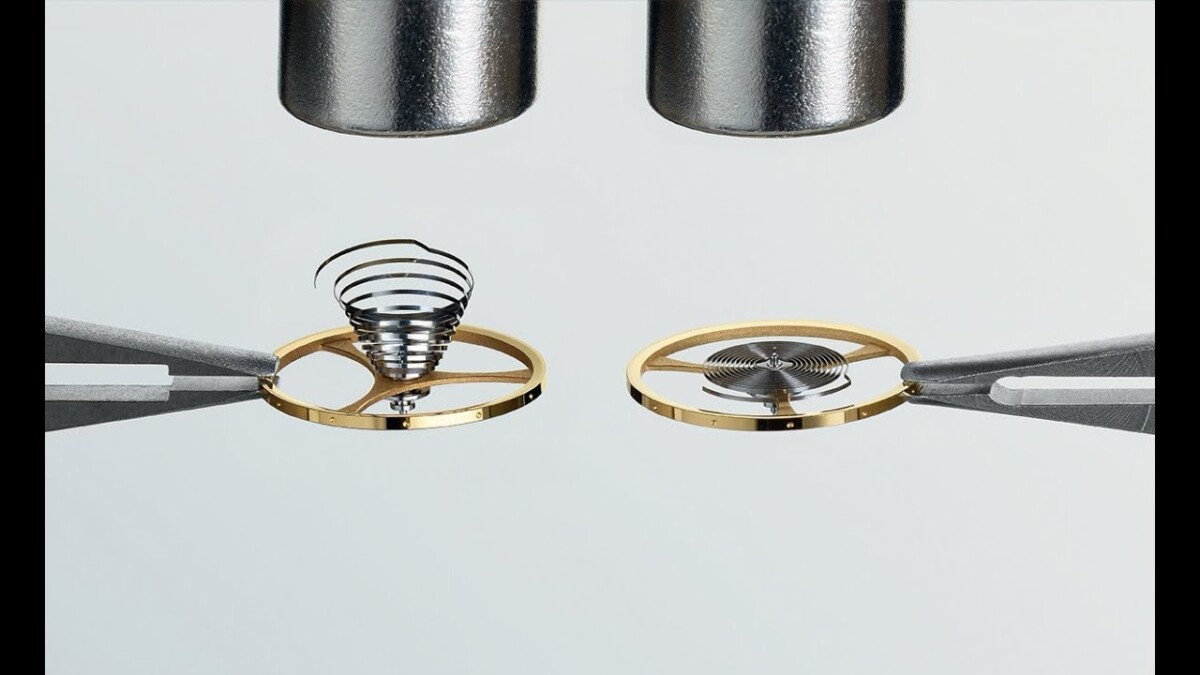
And the problem was serious because a magnetized hairspring can completely destroy the accuracy of a watch. The coils begin sticking together, the oscillation changes, and suddenly your meticulously adjusted luxury timepiece starts running like it just drank three espressos and developed anxiety.

This is where the story becomes interesting, because the hairspring is not just another watch component. It is the regulating organ of the movement. The literal heartbeat of a mechanical watch. And historically, one company controlled that beat more than anyone else: Nivarox-FAR, owned by Swatch Group.
For decades, even brands competing directly against Swatch Group depended on Swatch infrastructure to manufacture accurate mechanical watches. Which created a strange dynamic within the Swiss industry. Publicly, brands sold independence, exclusivity, identity. Behind the scenes, many of them were sourcing critical components from the same industrial ecosystem.
And during the 2000s, tensions surrounding that dependence started growing.
Nicolas Hayek had already made it clear that Swatch Group wanted to progressively reduce external supply to competing brands. Suddenly, the entire industry realized something uncomfortable: if Swatch controlled the hairsprings, then Swatch indirectly controlled Swiss mechanical watchmaking itself.
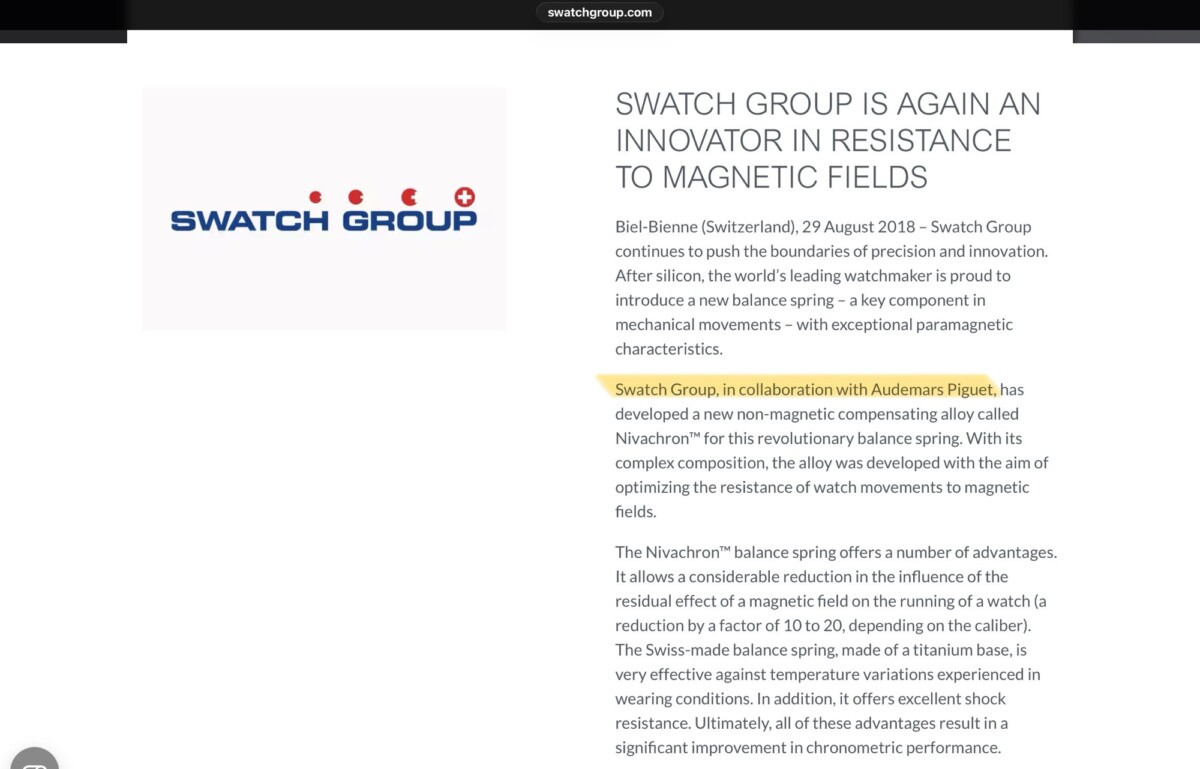
That fear triggered one of the most important unseen technological races in modern horology. Rolex developed Parachrom. Patek Philippe pushed Spiromax silicon technology. Omega went all-in on anti-magnetic engineering. And then, in 2018, Swatch Group and Audemars Piguet officially announced the development of Nivachron.
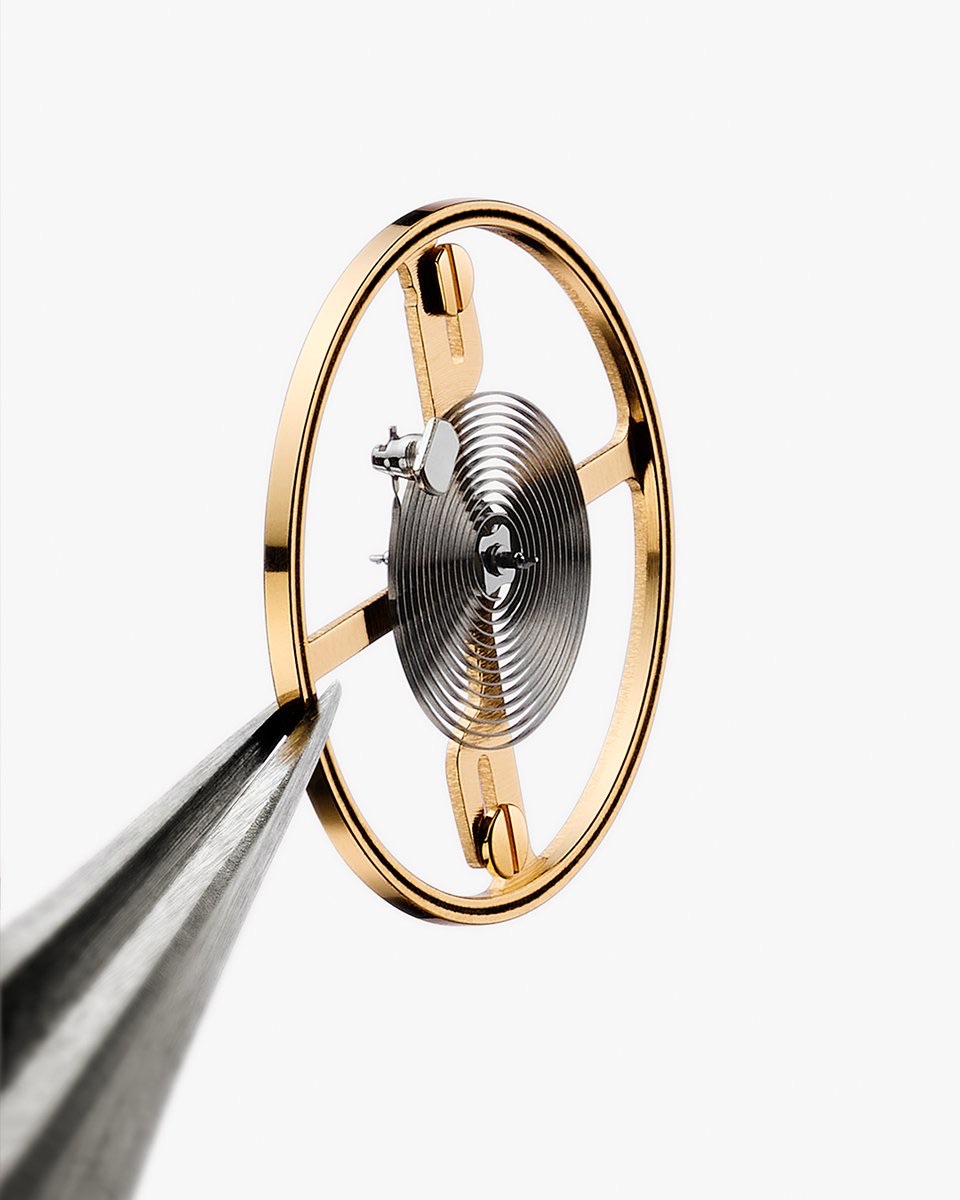
Yes. Audemars Piguet. The fiercely independent Le Brassus manufacture that collectors love to portray as existing on its own secluded mountain above the rest of the industry had quietly collaborated with the largest watch conglomerate on earth.
And the funny part is that almost nobody noticed. Probably because there wasn’t a queue outside a boutique for it.
Nivachron was different from silicon solutions because it preserved a metallic architecture while dramatically improving resistance to magnetism, shocks, and temperature variations. In simple terms, it modernized the traditional hairspring without abandoning traditional watchmaking altogether.
That matters more than it sounds. Because silicon, despite being technically brilliant, has always created philosophical debates in high horology. It’s difficult to reshape, difficult to regulate traditionally, and for some purists, simply feels too industrial. Nivachron became a middle ground. Advanced enough for the realities of modern life, but still mechanically familiar.
And here’s the part that makes this entire story fascinating. Audemars Piguet did not collaborate on a limited-edition hype product. They collaborated on infrastructure.On metallurgy. On chronometry. On the survival of the mechanical watch in the digital age.
The same technology partially developed alongside one of the most prestigious names in haute horlogerie would later end up inside watches from Tissot, Hamilton, Longines, Mido, and even Swatch itself. Which completely breaks the fantasy most people have about the Swiss watch industry.
Because watchmaking has never been as isolated as marketing wants you to believe. The brands compete, absolutely. Ruthlessly, sometimes. But they also coexist within an interconnected industrial network where suppliers, research laboratories, movement manufacturers, and technical patents constantly overlap behind the curtain.
Nivachron simply exposed that reality publicly. So whether the Royal Pop collaboration excites you, horrifies you, or simply exhausts you, remember this:
AP and Swatch Group already worked together long before colorful bioceramic cases entered the conversation. They just did it somewhere infinitely less visible. Inside the heartbeat of the watch itself.
And this is SO cool to me and my fellow watch nerds. I made an instagram reel an hour ago and the response is just amazing. People really didn’t know about this. Even big journalists and creators. And that tells you something.

SUBSCRIBE NOW AND NEVER MISS A THING !